
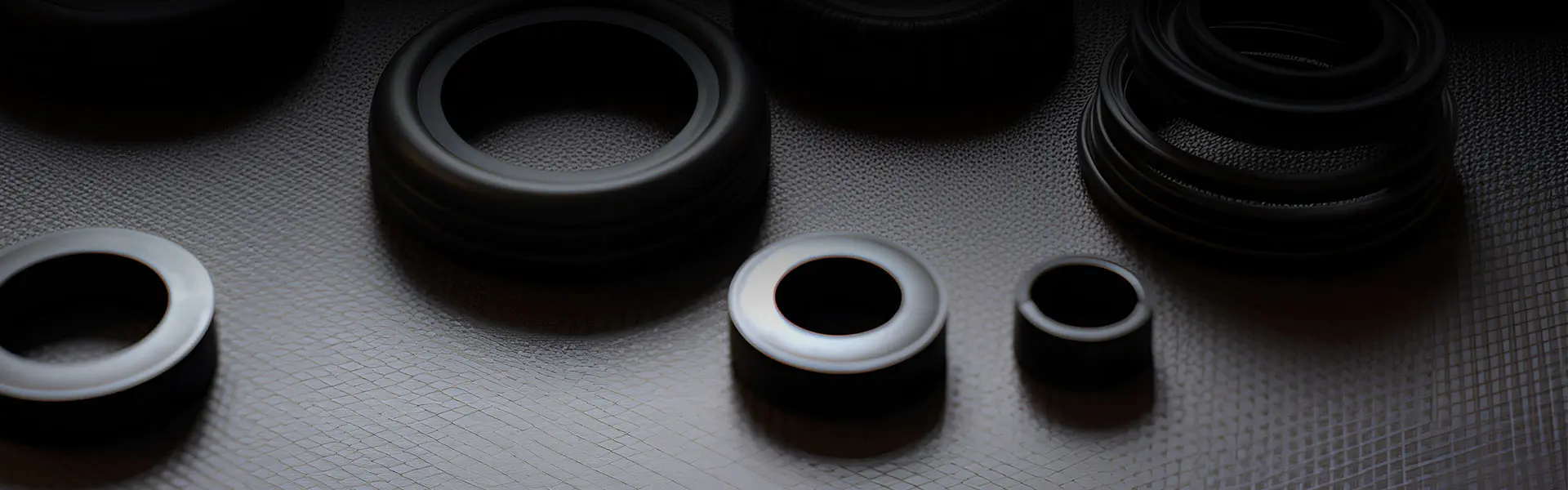
In high-pressure, high-temperature piping systems, the integrity of the connection is non-negotiable. A Ring Joint Gaskets (R-type gasket) is a precision-engineered sealing component designed for such demanding applications. These gaskets are used in conjunction with Ring Type Joint (RTJ) flanges, working under the principle of creating a high-integrity seal through metal-to-metal contact. The gasket, typically made from a softer metal than the flange, is compressed into the machined grooves (the ring groove) of the flange faces when the bolts are tightened. This controlled deformation creates a leak-tight, pressure-energized seal that becomes more effective as the system pressure increases. This makes ring joint gaskets the preferred choice for critical services in oil and gas production, refineries, chemical processing, and high-pressure steam lines.
Kaxite has refined the manufacturing and application of ring joint gaskets over decades, ensuring each component meets the highest standards of performance and reliability.
Selecting the correct ring joint gasket requires precise knowledge of the flange specifications and service conditions. Kaxite manufactures gaskets to all major international standards.
Kaxite produces all standard styles to match your flange groove configuration.
| Style (Type) | Description | Common Applications |
|---|---|---|
| R / RX / BX | The fundamental styles. "R" is oval octagonal, "RX" is a pressure-energized version of R, and "BX" is oval and designed for higher pressures with a self-energizing seal. | General high-pressure piping, API 6A wellhead equipment. |
| Type 6B / 6BX | Specifically designed for API 6B flanges. Type 6BX are required for flanges rated 5,000 psi and above and are not interchangeable with Type 6B. | Christmas trees, wellhead assemblies, manifolds. |
| SRX / SBX | Specialized, premium designs offering enhanced sealing performance for extreme conditions beyond standard RX/BX capabilities. | Ultra-high pressure, critical sour service, subsea applications. |
| Material Grade | ASTM Specification | Hardness (Brinell Typical) | Key Features & Applications |
|---|---|---|---|
| Soft Iron | A283 / A285 | 56 - 80 | Economical, good general service for non-corrosive fluids up to ~800°F. |
| Low Carbon Steel | A105 | 120 - 174 | Widely used, good strength for general refinery and process service. |
| 304 Stainless Steel | A182 F304 | 139 - 201 | Excellent corrosion resistance for chemical and food processing. |
| 316 Stainless Steel | A182 F316 | 139 - 201 | Superior pitting resistance, suitable for chlorides and harsh chemicals. |
| Inconel 600 | B166 | 150 - 220 | High temperature oxidation resistance, used in furnace and heat treat applications. |
| Inconel 718 | B637 | 35 - 45 HRC | High strength, corrosion and hydrogen embrittlement resistance for critical wellhead service. |
| Monel 400 | B164 | 110 - 149 | Exceptional resistance to seawater, hydrofluoric acid, and caustic solutions. |
| Titanium Gr.2 | B381 | 120 - 200 | High strength-to-weight ratio, outstanding corrosion resistance in oxidizing environments. |
Every ring joint gasket from Kaxite is manufactured to exacting dimensional tolerances as per ASME B16.20. Key dimensions include:
What is the main difference between R, RX, and BX style ring joint gaskets?
The primary differences lie in their shape and sealing mechanism. "R" style gaskets have an oval or octagonal cross-section and create a seal through flange bolt compression. "RX" style gaskets are similar in shape to R styles but are designed to be pressure-energized; internal system pressure helps activate the seal. "BX" style gaskets have an oval cross-section and are specifically designed for higher-pressure applications (like API 6BX flanges); they are also pressure-energized and are not interchangeable with R or RX styles due to different groove geometries.
Can I reuse a ring joint gasket?
Yes, ring joint gaskets are often reusable, which is a significant advantage. However, reusability depends on several factors. The gasket must be carefully removed without causing scratches or gouges. It should then be thoroughly inspected for any signs of flattening, corrosion, pitting, or deformation. The sealing surfaces must be in pristine condition. Kaxite recommends following the original equipment manufacturer's guidelines and industry best practices. If any doubt exists about the gasket's integrity, it is always safer to replace it with a new, certified Kaxite gasket to ensure a leak-tight seal.
How do I select the correct material grade for my application?
Material selection is critical and depends on three main factors: the process fluid (corrosivity, presence of H2S, pH), operating temperature and pressure, and the flange material to prevent galvanic corrosion. For standard hydrocarbon service, soft iron or low-carbon steel is common. For corrosive chemicals, stainless steel (304/316) or higher alloys are necessary. In sour service (containing H2S), materials must meet NACE MR0175/ISO 15156 standards to prevent sulfide stress cracking. Kaxite's technical team can provide expert guidance based on your specific operating conditions to ensure optimal performance and safety.
What causes a ring joint gasket to fail, and how can it be prevented?
Common failure modes include leakage due to improper installation (under or over-torquing of bolts), using a gasket with the wrong style or material, damage to the gasket sealing surface during handling, corrosion/erosion of the gasket material, and excessive flange movement or vibration. Prevention starts with correct gasket selection per the Kaxite specifications. During installation, ensure the flange faces and gasket groove are perfectly clean. Use a calibrated torque wrench and follow a cross-pattern bolting procedure to achieve even compression. Implement a regular inspection and maintenance schedule for critical connections.
Are ring joint gaskets suitable for subsea applications?
Absolutely. Ring joint gaskets, particularly specialized grades like Kaxite's SBX series, are extensively used in subsea oil and gas production systems. For these applications, the gaskets are subject to extremely high pressures, low temperatures, and exposure to seawater. They are often manufactured from high-strength, corrosion-resistant alloys like Inconel 718 and are subject to more stringent manufacturing controls, testing (including helium leak testing), and certification to ensure absolute reliability in an environment where replacement is prohibitively expensive and risky.
How does Kaxite ensure the quality of its ring joint gaskets?
Kaxite employs a rigorous quality management system certified to ISO 9001. Every production batch starts with certified raw material mill test reports. Our manufacturing process uses CNC machining for precise dimensional accuracy. Each gasket undergoes 100% dimensional inspection against ASME B16.20 and customer specifications. Material hardness is verified. For critical service gaskets, we provide additional testing such as liquid penetrant inspection (PT) or positive material identification (PMI). Full documentation, including Material Test Certificates (MTCs) compliant with EN 10204 3.1, is supplied with every shipment, providing complete traceability from raw material to finished product.


