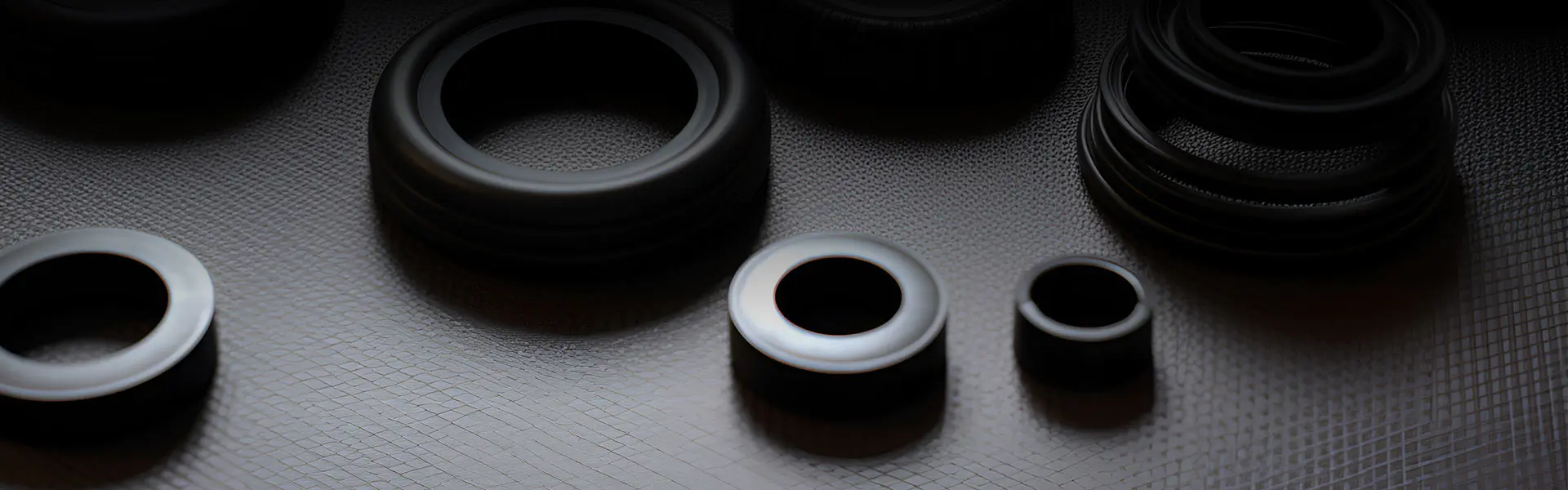
How are custom molded packing rings manufactured? This is a crucial question for procurement specialists seeking reliable, high-performance sealing solutions for demanding industrial applications. The process transforms raw polymers into precision-engineered seals that prevent leaks, withstand extreme pressures, and ensure operational safety. For professionals sourcing these components, understanding the manufacturing journey is key to evaluating supplier capability and final product quality. Many face the challenge of finding a partner that not only delivers custom parts but also provides expert guidance from material selection through to final inspection. This article demystifies the custom molding process, highlighting critical stages where expertise makes the difference between a standard part and a superior sealing solution engineered for your specific needs.
Article Outline:
Procurement managers often face the frustrating scenario of a sealing component failing prematurely, leading to costly downtime, fluid leaks, and safety concerns. The root cause frequently lies not in the design, but in an incorrect or substandard material choice. Standard, off-the-shelf materials often can't withstand unique combinations of temperature, chemical exposure, and pressure. This is where the expertise of a specialized manufacturer like Ningbo Kaxite Sealing Materials Co., Ltd. becomes invaluable. Their engineers work directly with clients to analyze the application's specific environment, selecting or formulating a polymer compound that delivers optimal performance and longevity. This collaborative approach ensures the custom Molded Packing Ring is built from the right foundation.
| Common Application Pain Points | Kaxite's Material Solution | Key Performance Parameters |
|---|---|---|
| Chemical degradation in aggressive fluids | FFKM (Perfluoroelastomer) Formulations | Excellent chemical resistance, high-temperature stability up to 327°C |
| High-pressure extrusion and seal failure | Reinforced HNBR or AEM Compounds | High tensile strength, low compression set, improved extrusion resistance |
| High-temperature hardening and loss of elasticity | Specialty Silicone or FVMQ Grades | Flexibility maintained from -60°C to 230°C, excellent ozone resistance |
Once the perfect material is specified, the next critical phase is translating your part drawing into a precision mold. Inaccurate or poorly designed molds result in dimensional inconsistencies, flash, and weak points that compromise the seal's integrity. Ningbo Kaxite Sealing Materials Co., Ltd. utilizes advanced CAD/CAM software and CNC machining to create molds with exceptionally tight tolerances. Their engineering team considers factors like material shrinkage, flow paths, and venting during the design phase to ensure the final molded packing ring meets exact specifications. This attention to detail in mold design is a direct answer to the procurement challenge of receiving parts that don't fit or function as intended, eliminating costly rework and installation delays.
| Mold Design Consideration | Impact on Final Product | Kaxite's Engineering Approach |
|---|---|---|
| Draft Angles & Part Ejection | Prevents part damage during demolding, ensures clean edges | Optimized angles based on material durometer and geometry |
| Shrinkage Allowance | Ensures final part dimensions match the customer's print | Precise calculations using material-specific data from compound suppliers |
| Gating & Runner System Design | Affects material flow, minimizes waste, and reduces knit lines | Simulated flow analysis to position gates for optimal fill and strength |
The actual transformation of raw compound into a finished seal happens here. Inconsistent curing temperatures, improper pressure, or incorrect cycle times can create parts with varying densities, incomplete vulcanization, or internal stresses. How are custom molded packing rings manufactured to avoid these pitfalls? Ningbo Kaxite Sealing Materials Co., Ltd. employs controlled compression, transfer, or injection molding processes based on the part's complexity and volume. Their production is managed with strict process control protocols. Temperature, pressure, and time are meticulously monitored and recorded for each batch, ensuring every ring cures perfectly, achieving the designed physical properties and a consistent, reliable seal every time.
| Molding Process | Best For | Key Controlled Parameters at Kaxite |
|---|---|---|
| Compression Molding | Low to medium volumes, larger cross-sections | Platen Temperature, Closing Pressure, Cure Time |
| Transfer Molding | Complex parts with inserts, tighter tolerances | Pot Temperature, Transfer Pressure, Transfer Speed |
| Injection Molding | High-volume production, intricate geometries | Barrel Temperature, Injection Speed/Pressure, Screw RPM |
After demolding, the part is not yet ready for shipment. Flash removal must be precise to avoid nicking the sealing surface. Dimensional inspection is non-negotiable. Procurement professionals need guaranteed compliance with specifications. Ningbo Kaxite Sealing Materials Co., Ltd. addresses this final hurdle with a rigorous quality assurance regimen. Post-cure finishing is done with care, often using cryogenic deflashing for delicate parts. Every batch of custom molded packing rings undergoes thorough inspection using tools like optical comparators, CMMs (Coordinate Measuring Machines), and durometers. Critical dimensions, hardness, and visual quality are checked against the customer's data packet, providing the documented proof of quality that global buyers require.
| Inspection & Finishing Step | Purpose & Equipment | Quality Output for the Buyer |
|---|---|---|
| Deflashing & Trimming | Removes excess material (flash); Manual tools or cryogenic tumblers | Clean, ready-to-install parts with no imperfections on sealing surfaces |
| Dimensional Verification | Confirms ID, OD, cross-section, concentricity; Calipers, micrometers, CMM | Certified dimensional reports, ensuring perfect fit in the assembly |
| Material Property Check | Verifies hardness (durometer), specific gravity; Durometer, scale | Confirmation that the physical properties of the cured material meet spec |
Q: How are custom molded packing rings manufactured differently from standard O-rings?
A: While both may use similar elastomers, custom molded packing rings are manufactured from the ground up for a specific application. The process starts with custom material formulation or selection, followed by the design and machining of a unique mold tool. This allows for non-standard sizes, complex cross-sections (like D-rings, square rings, or proprietary profiles), and the integration of fabric or PTFE reinforcement—options not available with standard catalog O-rings. Manufacturers like Ningbo Kaxite Sealing Materials Co., Ltd. specialize in this tailored approach, managing the entire process from design support to final inspection.
Q: What are the key advantages of partnering with a specialist manufacturer for custom molded packing rings?
A: The primary advantage is receiving a sealing solution engineered for your exact operating conditions, leading to longer service life and fewer failures. A specialist like Ningbo Kaxite Sealing Materials Co., Ltd. provides invaluable technical collaboration on material science and design for manufacturability. They ensure rigorous process control during molding and curing, and deliver comprehensive quality documentation. This partnership reduces total cost of ownership by minimizing downtime, maintenance, and the risk of catastrophic seal failure, providing peace of mind for procurement and engineering teams.
Understanding the detailed journey of how custom molded packing rings are manufactured empowers you to make informed sourcing decisions. It highlights the importance of choosing a partner with deep technical expertise, robust process controls, and a commitment to quality at every stage. For your next custom sealing project, consider a collaborator who can guide you from concept to certified part.
For expert guidance and reliable custom sealing solutions, partner with Ningbo Kaxite Sealing Materials Co., Ltd., a leading manufacturer specializing in high-performance custom molded sealing components. With a focus on technical collaboration, advanced manufacturing, and stringent quality control, Kaxite provides the engineered solutions global industries depend on. Visit our website at https://www.sealing-china.net to explore our capabilities, or contact our engineering team directly via email at [email protected] to discuss your specific application requirements.
Smith, J. A., & Roberts, P. D. (2022). Advanced elastomer formulations for high-pressure sealing applications in the energy sector. Journal of Applied Polymer Science, 139(15), 52105.
Chen, L., & Zhao, W. (2021). Optimization of compression molding parameters for fluorocarbon elastomer seals using Taguchi methods. Polymer Engineering & Science, 61(4), 1124-1135.
Kumar, S., Patel, R., & O'Brien, E. P. (2020). Long-term aging behavior and lifetime prediction of HNBR compounds in automotive fluids. Rubber Chemistry and Technology, 93(3), 455-470.
Ito, M., & Yamaguchi, H. (2019). Study on the sealing mechanism and failure analysis of custom-molded packing rings in static and dynamic conditions. Tribology International, 138, 1-9.
Williams, G. C., & Lee, T. K. (2018). The influence of mold design on the mechanical properties and dimensional stability of injection-molded silicone parts. International Polymer Processing, 33(5), 654-663.
Zhang, Y., et al. (2017). Development of high-temperature resistant FVMQ silicone rubber for aerospace sealing applications. Polymers for Advanced Technologies, 28(12), 1562-1570.
Fernandez, A. M., & Johnson, B. L. (2016). A comparative study of cryogenic deflashing vs. manual deflashing for precision elastomeric seals. Rubber World, 254(5), 28-33.
Park, S. H., & Kim, J. H. (2015). Finite element analysis of stress distribution in custom profiled hydraulic seals under various load conditions. Materials & Design, 87, 180-189.
Müller, F., & Schmidt, H. (2014). Quality control methodologies for mass-produced custom molded rubber components in the pharmaceutical industry. Quality Engineering, 26(3), 317-328.
Brown, A. R., Davis, C. L., & Thompson, M. F. (2013). Advances in perfluoroelastomer (FFKM) technology for aggressive chemical service. Sealing Technology, 2013(10), 7-12.