
Imagine checking a batch of rubber sheets at 10 p.m. before a weekend shutdown. The supplier calls it “general purpose rubber,” but the gasket feels softer than the sample you approved. You ask the key question: What is the hardness of general rubber sheet? The short answer is that most general-purpose rubber sheets fall between 60 and 70 Shore A, while the wider commercial range is about 40–90 Shore A. That number is not just a lab result. It decides whether your flange seals under pressure, whether the sheet cuts cleanly on a die press, and whether maintenance will call you again in three months. Hardness is often treated as a minor line item, but experienced buyers use it as the fastest screening tool for material selection. A sheet that is too soft can extrude from the clamp load. A sheet that is too hard may not conform to rough or misaligned flange faces. This guide explains hardness ranges, test methods, specification tactics, and the QC steps that reduce sourcing risk. It also shows how Ningbo Kaxite Sealing Materials Co., Ltd. helps industrial buyers match the quoted Shore A value to real sealing performance.
Contents
A buyer once received 3 mm “general rubber sheet” from a new source. The datasheet only said “medium hardness.” After installation, gaskets squeezed out from a low-pressure water flange. The root cause was not thickness or bolt torque; it was hardness. Medium is not a specification.
Solution: Request Shore A durometer values before ordering. For most general-purpose sealing, use 60–70 Shore A as a practical default, then adjust based on media, pressure, and flange condition. A reliable supplier will confirm hardness on the sample, the production batch, and the final inspection report.
| Material condition | Common Shore A | Procurement risk if ignored |
|---|---|---|
| Soft general sheet | 40–55 | Extrusion under flange load, blowout risk |
| Standard general sheet | 60–70 | Balanced sealing for water, air, low-pressure service |
| Harder sheet | 75–90 | Better creep resistance but requires flat mating surfaces |
Pain point: A maintenance buyer asks for “60 Shore D rubber sheet” and receives a rigid material closer to plastic. The issue is the durometer scale.
Solution: For elastomer sheets up to about 90 Shore A, specify Shore A. Shore D is normally reserved for hard rubber and semi-rigid materials above 90 Shore A. Most general rubber sheets for gaskets, padding, and sealing are tested with a Shore A durometer under ASTM D2240.

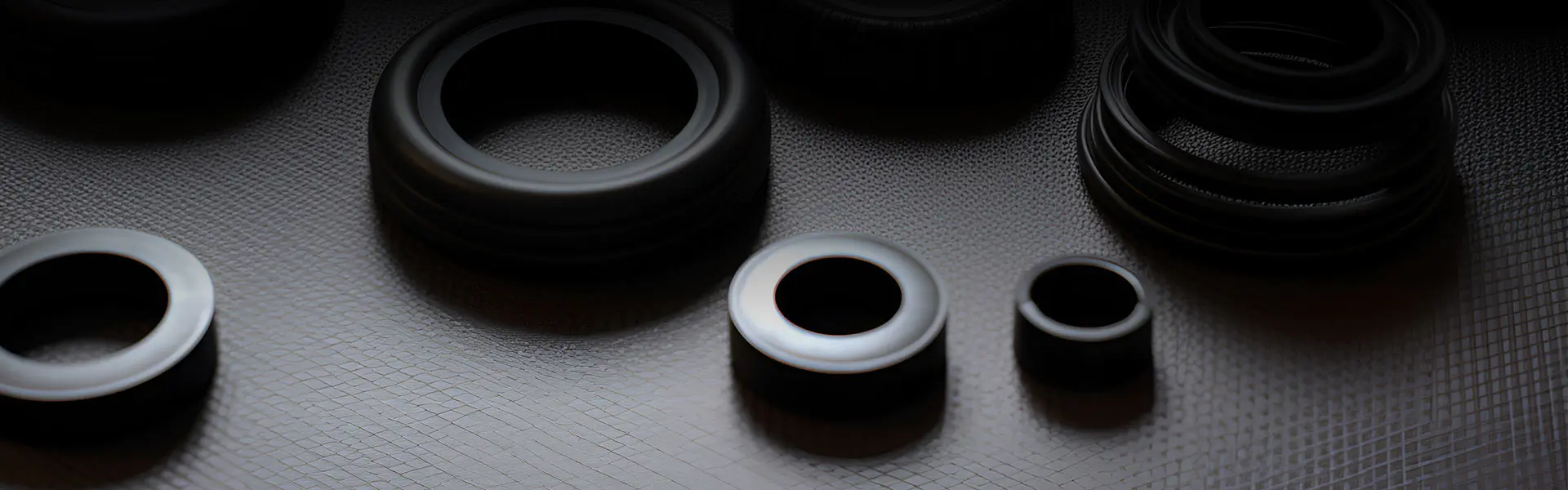
The image above shows a typical general rubber sheet stock. Surface hardness is measured with a handheld Shore A durometer at several points across the sheet, not just at one edge. Consistent readings indicate uniform mixing and curing.
Pain point: Buyers often search by material name only, such as “EPDM sheet,” without specifying hardness. They receive an EPDM sheet that is too soft for the original gasket design.
Solution: Treat material and hardness as one package. The table below gives the mainstream Shore A ranges for common rubber sheet types.
| Material | Typical Shore A range | Key consideration |
|---|---|---|
| SBR rubber sheet | 60–70 | General-purpose water and air |
| NBR rubber sheet | 60–75 | Oil and fuel resistance |
| EPDM rubber sheet | 50–70 | Weather, ozone, hot water |
| Neoprene rubber sheet | 50–70 | Moderate oil and weather resistance |
| Silicone rubber sheet | 40–70 | Wide temperature range, clean/food contact |
| Natural rubber sheet | 40–80 | High resilience, poor oil resistance |
These ranges are not absolute. Depending on compound design, a supplier can adjust carbon black, plasticizer, and curing system to move hardness up or down. That is exactly where Ningbo Kaxite Sealing Materials Co., Ltd. supports buyers with custom formulations and hardness confirmation instead of forcing a stock sheet into the wrong application.
Pain point: A processor chooses a 90 Shore A sheet because it feels durable. Later, the sheet cannot compress enough to seal a rough flange face, and the water leak returns. Another buyer chooses a 45 Shore A sheet because it is easy to cut, but the gasket extrudes after two weeks.
Solution: Match hardness to installation method and sealing load. Softer sheets conform to irregular surfaces but need controlled compression. Harder sheets resist creep but need flat, well-clamped flanges.
| Shore A hardness | Sealing behavior | Cutting and installation note |
|---|---|---|
| 40–55 | Conforms easily; extrusion risk under high load | Very easy to cut; may stretch during handling |
| 60–70 | Balanced compression and sealing load | Clean die cutting; standard joint installation |
| 75–90 | Higher load required; resists creep and distortion | More rigid; use sharp blades or waterjet cutting |
Pain point: An engineering buyer writes “70 Shore A ±2” on the drawing and receives quotes with a 30% price premium. In reality, commercial rubber sheet is produced within a normal ±5 Shore A variation, and over-specification reduces your supplier base without improving field performance.
Solution: Use a practical hardness band, name the test method, and request a batch certificate. For most static sealing, a 65±5 Shore A callout is both clear and commercially available.
| Specification item | Recommended callout | Why it matters |
|---|---|---|
| Hardness | 65±5 Shore A | Covers production variation without premium |
| Test method | ASTM D2240 | Consistent measurement between labs |
| Batch check | Hardness test report for each lot | Detects invisible compound drift |
If the application truly requires a narrow range, ask for special compounding and confirm the capability before release. Ningbo Kaxite Sealing Materials Co., Ltd. can quote standard hardness bands or custom-controlled batches, so you only pay for the degree of control your application requires.
Pain point: A purchasing team receives a shipment that feels different from the approved sample, but the supplier cannot supply hardness data. The entire batch becomes a quality dispute without an objective reference.
Solution: Make hardness testing part of the purchase order. Ask for measured values, not nominal catalog numbers. At Ningbo Kaxite Sealing Materials Co., Ltd., rubber sheets are checked with calibrated durometers and the team can provide batch-level reports for hardness, tensile strength, elongation, and compression set.
| QC item | Method or standard | Typical acceptance reference |
|---|---|---|
| Hardness | ASTM D2240 Shore A | ±5 Shore A from agreed value |
| Tensile strength | ASTM D412 | 3–10 MPa depending on grade |
| Elongation at break | ASTM D412 | 150–500% depending on polymer |
| Compression set | ASTM D395 | ≤25–35% for sealing grades |
This approach solves the most common complaint from Google-sourced buyers: the gap between promised hardness and delivered hardness.
Q1: What is the hardness of general rubber sheet for water and air sealing?
For most water and low-pressure air sealing, a 60–70 Shore A rubber sheet is the mainstream choice. This range is soft enough to conform to minor flange irregularities but firm enough to resist internal pressure without extruding. If the flange is rough, choose the lower end around 60 Shore A. If the pressure is higher, move toward 70 Shore A and require compression set data. At Ningbo Kaxite Sealing Materials Co., Ltd., standard SBR and EPDM sheets in this range are stocked in common thicknesses and can be supplied with hardness test reports.
Q2: What is the hardness of general rubber sheet if I need oil or fuel resistance?
For oil, fuel, or solvent contact, hardness alone is not enough. Choose NBR rubber sheet in the 70–75 Shore A range as the mainstream option. The slightly higher hardness improves resistance to swelling and extrusion under mechanical load. If the service involves aromatics, strong acids, or high-temperature oil, move to specialty compounds and test hardness after fluid immersion. Ningbo Kaxite Sealing Materials Co., Ltd. can help match hardness, polymer type, and chemical compatibility to reduce trial-and-error sourcing.
Use this checklist when requesting quotations for general rubber sheet:
A small step in specification prevents the most common failure mode: a sheet that is “close enough” during quoting but wrong after installation. If your current rubber sheet hardness is inconsistent or your supplier cannot provide hardness data, contact Ningbo Kaxite Sealing Materials Co., Ltd. for a material recommendation, sample batch, or technical comparison.
For sourcing teams that need stable rubber sheet hardness and repeatable sealing performance, Ningbo Kaxite Sealing Materials Co., Ltd. supplies commercial rubber sheets with clear Shore A specifications, batch test reports, and custom hardness options. Contact the team at [email protected] for samples, technical data, or a quotation.
Gent, A. N. (2012). Compression and hardness effects in rubber sealing applications. Rubber Chemistry and Technology, 85(4), 505–521.
Brown, R. P. (2006). Physical testing of rubber. Polymer Testing, 25(8), 1107–1118.
Sommer, J. G. (2009). Hardness, compression set, and sealing force retention in elastomer sheets. Journal of Applied Polymer Science, 114(2), 915–924.
Rivlin, R. S. (1997). The role of durometer hardness in gasket design. Journal of Elastomers and Plastics, 29(2), 137–149.
Dick, J. S. (2010). ASTM D2240 and the measurement of rubber hardness. Polymer Testing, 29(6), 777–784.
Nagdi, K. (1993). Rubber as an engineering material: Hardness and mechanical properties. Materials & Design, 14(2), 103–110.
South, J. T. (2018). Shore hardness and compression set of SBR and NBR sealing sheets. Sealing Technology, 2018(5), 7–12.
Zhang, L., & Wang, H. (2015). Effect of carbon black loading on Shore A hardness of general rubber sheets. Journal of Applied Polymer Science, 132(18), 41829.
Choi, S. S. (2002). Influence of crosslink density on hardness and compression set of NR and EPDM. Rubber Chemistry and Technology, 75(3), 452–462.
Flitney, R. K. (2019). Seals and sealing handbook: Hardness selection for static gaskets. Sealing Technology, 2019(3), 25–31.
-


