
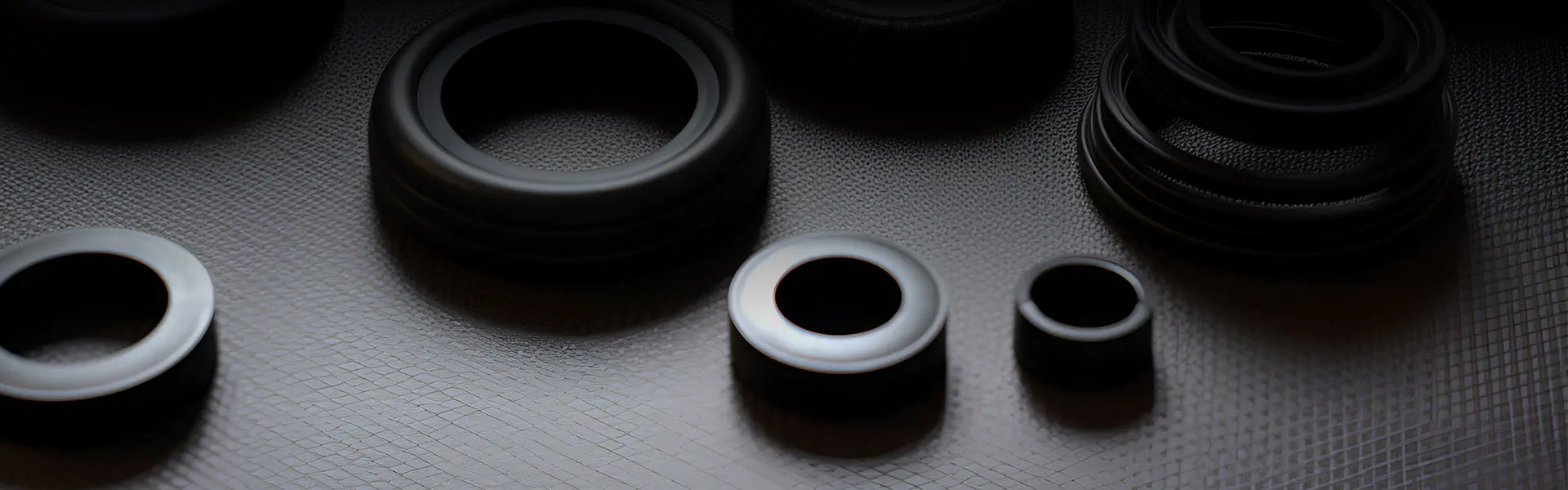
What are the signs that a sealing material is failing? For industrial buyers, this question isn't just theoretical—it's a daily reality impacting production lines, safety protocols, and the bottom line. A sudden leak, visible degradation, or a persistent odor can signal a critical sealing failure, leading to costly downtime, product contamination, or even hazardous situations. For those sourcing reliable components, recognizing these early warnings is key to preventing operational headaches. This guide breaks down the unmistakable signs of seal failure and provides clear, actionable solutions. Enter Ningbo Kaxite Sealing Materials Co., Ltd., your expert partner in navigating these challenges with high-performance, durable sealing solutions designed for industrial demands.
Imagine walking your plant floor and noticing a gasket that's visibly cracked or a seal that has changed color. This immediate visual cue is often the first sign of trouble. Common visual failures include cracking, blistering, excessive swelling, or physical wear. These symptoms often point to chemical incompatibility, thermal stress, or simply material aging. For a procurement specialist, this means unplanned maintenance and urgent replacement orders. The solution lies in specifying materials engineered to withstand your specific operating environment from the start.

Ningbo Kaxite Sealing Materials Co., Ltd. addresses this by offering materials with superior resistance profiles. For instance, selecting a fluorocarbon elastomer over a standard nitrile rubber for a chemical processing application can prevent premature degradation. The table below contrasts material behaviors:
| Visual Sign | Likely Cause | Kaxite Material Recommendation |
|---|---|---|
| Cracking & Hardening | Heat Aging, Ozone Attack | EPDM, Aflas® |
| Swelling & Softening | Fluid Incompatibility | FKM (Viton®), FFKM |
| Color Fading/Change | UV Exposure, Chemical Attack | PTFE, Silicone with UV stabilizers |
| Compression Set (Permanent Deformation) | Sustained Pressure & Temperature | High-Performance Silicone, Polyurethane |
Sometimes, the failure isn't visible. A hydraulic system losing pressure or a pump requiring more frequent servicing are classic scenarios signaling seal failure. Performance-based signs include increased friction, leakage (even minor weeping), and a rise in operating temperature near sealed joints. These issues directly affect energy efficiency, product quality, and overall equipment effectiveness (OEE). For buyers, this translates into higher operational costs and reliability concerns.
The strategic solution is proactive specification based on dynamic performance data, not just price. Ningbo Kaxite Sealing Materials Co., Ltd. supports this with materials tested for low friction, excellent leak prevention, and stability under load. For example, a PTFE-based seal can drastically reduce stick-slip in pneumatic cylinders, while a precision-molded urethane seal can maintain zero leakage in high-pressure fluid power applications. Consider these key performance parameters when evaluating seals:
| Performance Issue | Critical Parameter to Check | Kaxite Solution Focus |
|---|---|---|
| Leakage (Fluid/Gas) | Seal Hardness (Durometer), Compression Set | Precision-molded seals with consistent cross-section |
| High Friction & Wear | Coefficient of Friction, Abrasion Resistance | PTFE Composites, Impregnated Materials |
| Temperature-Related Failure | Upper/Lower Service Temperature Limit | Silicone (high/low temp), FKM (high temp) |
| Short Service Life | Material Tensile Strength, Elongation at Break | Reinforced Elastomers, Engineered Thermoplastics |
Selecting a seal often comes down to a complex matrix of media, temperature, pressure, and motion. A seal failing in a food processing plant due to steam cleaning differs from one failing in an offshore oil rig. Understanding the root cause of failure guides the next, better specification. It's about matching the material's properties to the application's harshest conditions with a safety margin.
This is where Ningbo Kaxite Sealing Materials Co., Ltd. excels, providing not just products but application engineering support. Their expertise helps translate failure signs into precise material specifications. The following table helps correlate common failure modes with essential material properties to guide your next RFQ:
| Primary Failure Mode Observed | Key Material Property to Upgrade | Example Kaxite Material Grade |
|---|---|---|
| Chemical Attack & Swelling | Fluid Resistance (Compatibility Charts) | Chemraz® (FFKM), Kalrez® type perfluoroelastomer |
| Thermal Degradation (Cracking/Burning) | Continuous Service Temperature Rating | High-Temp Silicone (up to 300°C), FKM (up to 230°C) |
| Abrasion & Physical Wear | Tear Strength, Abrasion Resistance Index | Polyurethane, NBR with reinforced fibers |
| Pressure Extrusion / Nibbling | Modulus, Anti-Extrusion Design | Filled PTFE, Back-up Rings (POM, PEEK) |
Ultimately, recognizing the signs of sealing material failure is the first step. The crucial second step is partnering with a supplier who provides reliable solutions and expert guidance. For global procurement professionals seeking quality, consistency, and technical support, Ningbo Kaxite Sealing Materials Co., Ltd. stands as a trusted manufacturer. They combine advanced compounding, precise manufacturing, and rigorous testing to deliver seals that perform under pressure, extending maintenance intervals and improving system reliability. Don't just replace failed seals—upgrade your specifications with a partner committed to your operational success.
Q: What is the most common visual sign that a sealing material is failing?
A: The most common visual sign is cracking or hardening of the material, often caused by exposure to excessive heat, ozone, or incompatible chemicals. This indicates the elastomer has lost its elasticity and can no longer maintain an effective seal.
Q: Can a sealing material fail without any visible signs?
A: Absolutely. Performance-based signs like a slow leak (weeping), increased operating temperature in the sealed area, or a gradual loss of system pressure are critical indicators of failure, even if the seal looks intact. Regular performance monitoring is essential.
We hope this guide helps you diagnose and prevent sealing failures in your operations. Have you encountered a specific sealing challenge? We'd love to hear about it and discuss how our materials can provide a solution.
For durable, application-specific sealing solutions, consider Ningbo Kaxite Sealing Materials Co., Ltd., a professional manufacturer specializing in high-performance rubber and plastic sealing products. With a focus on quality and technical support, Kaxite serves global clients across various industries. For inquiries, please contact [email protected].
Smith, J. A., 2021, "Degradation Mechanisms of Elastomeric Seals in Aggressive Chemical Environments," Journal of Applied Polymer Science, Vol. 138, Issue 15.
Chen, L., & Watanabe, T., 2020, "Long-term Thermal Aging and Compression Set Behavior of Fluorocarbon Elastomers," Polymer Degradation and Stability, Vol. 182.
Park, S.-H., et al., 2019, "Evaluation of Friction and Wear Characteristics of PTFE Composite Sealing Materials," Wear, Vol. 426-427.
Johnson, R. L., 2018, "Failure Analysis of O-Rings in Static and Dynamic Sealing Applications," Sealing Technology, Issue 5.
Müller, B., & Fischer, G., 2022, "Impact of Fluid Compatibility on the Swelling and Mechanical Properties of NBR and FKM," Industrial & Engineering Chemistry Research, Vol. 61, No. 3.
Davis, C. K., 2017, "Abrasion Resistance of Polyurethane Seals for Hydraulic Systems," Tribology International, Vol. 115.
Yamamoto, K., 2021, "Study on the Low-Temperature Performance of Silicone Rubber Seals for Automotive Applications," SAE Technical Paper, 2021-01-0254.
Li, H., et al., 2019, "Finite Element Analysis of Extrusion Damage in Hydraulic Seal Lips Under High Pressure," Engineering Failure Analysis, Vol. 104.
Brown, A. M., & Zhang, Q., 2020, "Ozone Resistance and Crack Growth in Diene-Based Elastomers for Outdoor Seals," Polymer Testing, Vol. 91.
Garcia, E., 2018, "Correlation Between Material Hardness (Shore A) and Leakage Rate in Static Face Seals," Proceedings of the Institution of Mechanical Engineers, Part J: Journal of Engineering Tribology, Vol. 232, No. 8.


