
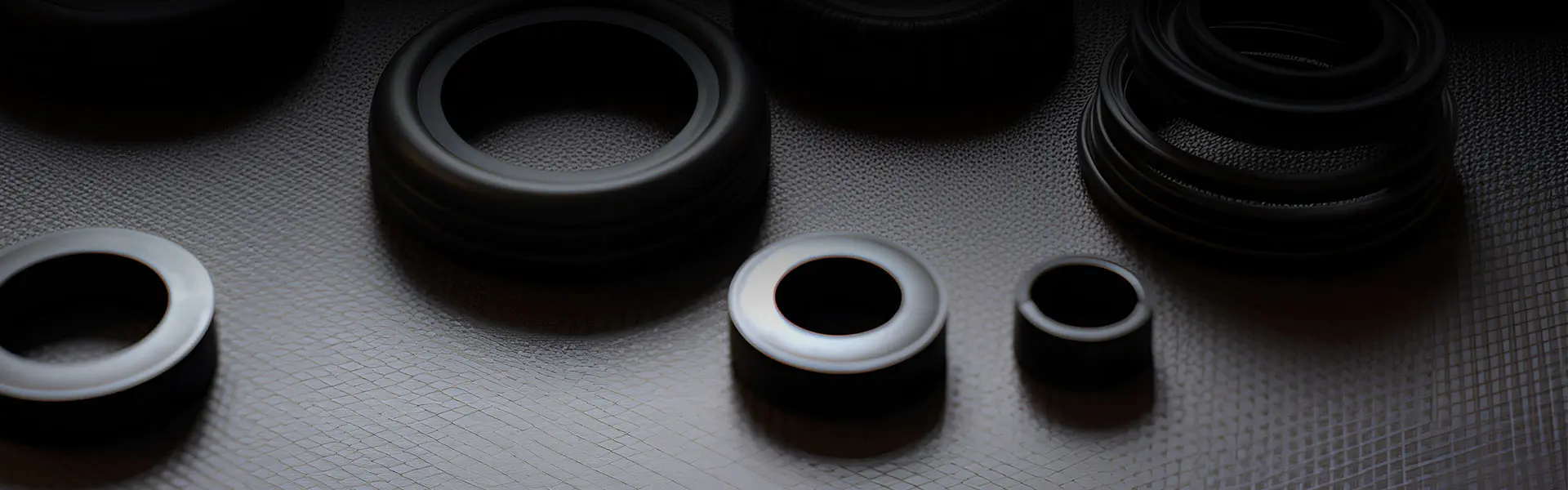
In the demanding world of industrial sealing, Graphite Packing, also known as graphite filament packing or flexible graphite packing, stands as a cornerstone material for creating reliable, long-lasting seals in pumps, valves, agitators, and other rotating or reciprocating equipment. Unlike traditional braided packings, graphite packing is manufactured from pure exfoliated (expanded) graphite ribbon, which is then corrugated and wound into dense, homogeneous rings or spools. This unique structure grants it exceptional thermal stability, chemical inertness, and self-lubricating properties, making it the go-to choice for sealing applications involving extreme temperatures, aggressive media, and where emissions control is critical.
Kaxite has been at the forefront of advanced sealing solutions for decades, engineering high-performance graphite packing that meets and exceeds the rigorous standards of modern industry. Our products are designed not just to seal but to enhance operational efficiency, reduce maintenance downtime, and ensure environmental compliance.
Kaxite offers a comprehensive range of graphite packing products, each engineered for specific service conditions. Below is a detailed breakdown of our standard grades and their technical parameters.
| Product Grade | Composition / Reinforcement | Temperature Range | pH Range | Specific Density (g/cm³) | Primary Applications |
|---|---|---|---|---|---|
| KX-GP100 (Pure Flexible Graphite) | 100% exfoliated graphite foil, corrugated and wound. No binders or additives. | -240°C to 3000°C (Non-Oxidizing) -240°C to 450°C (Oxidizing) |
0-14 (Except strong oxidizing agents) | 1.1 - 1.6 | High-temperature valves, heat exchangers, expansion joints, flanges. Ideal for severe chemical service. |
| KX-GP200 (Inconel Wire Reinforced) | Flexible graphite foil reinforced with Inconel 600 or 625 alloy wire. | -240°C to 650°C (Oxidizing) Up to 1600°C (Inert) |
0-14 | 1.8 - 2.2 | High-pressure pump and valve stems in refineries, chemical plants. Provides extra mechanical strength and extrusion resistance. |
| KX-GP300 (SS Foil Laminate) | Layers of flexible graphite alternated with thin 316 stainless steel foil. | -240°C to 550°C (Oxidizing) | 0-14 (Avoid chloride-rich environments) | 2.0 - 2.5 | Aggressive chemical services, high-pressure steam valves, hot oil systems. Excellent for containing hazardous fluids. |
| KX-GP400 (Carbon Fiber Reinforced) | Flexible graphite impregnated with high-modulus carbon fibers. | -240°C to 400°C (Oxidizing) | 0-14 | 1.4 - 1.8 | Rotary pumps, mixers, agitators. Offers excellent wear resistance and thermal conductivity for dynamic applications. |
Q: How does graphite packing differ from traditional braided packing like aramid or PTFE?
A: Traditional braided packings rely on lubricants (e.g., PTFE, graphite powder) that can degrade or wash out. Graphite packing is homogeneous, made entirely of interlocking graphite layers. This gives it far superior thermal stability, self-lubrication that doesn't deplete, and much better chemical resistance across a broader pH range. It creates a more reliable, maintenance-free seal in extreme conditions.
Q: Can Kaxite graphite packing be used in high-speed pump applications?
A: Yes, but selection is critical. For high-speed rotary equipment, our reinforced grades like KX-GP200 (Inconel wire) or KX-GP400 (carbon fiber) are recommended. They provide the necessary mechanical strength, resistance to extrusion, and enhanced heat dissipation to handle the frictional forces and centrifugal effects at high rotational speeds.
Q: Is graphite packing suitable for oxidizing atmospheres at high temperatures?
A: Pure graphite can oxidize (burn off) in air at temperatures above 450°C continuously. For oxidizing services up to 650°C, we strongly recommend our Inconel wire-reinforced KX-GP200 grade. The Inconel alloy forms a protective oxide layer, shielding the graphite core and significantly extending service life. Above this, specialized inert atmospheres or alternative materials should be considered.
Q: How do I determine the correct cross-sectional size and number of rings for my stuffing box?
A: The packing cross-section should typically be 1/8" (3mm) less than the radial clearance of the stuffing box. For the number of rings: measure the stuffing box depth and divide by the packing cross-section width. Generally, 5 to 6 rings are standard. Kaxite provides detailed installation guides and our technical support team can assist with specific calculations for your equipment model.
Q: Does graphite packing require a break-in or run-in period?
A: Yes, a proper break-in procedure is essential for optimal performance and longevity. After installation, tighten the gland nuts finger-tight only. Start the equipment and allow it to run for 10-15 minutes to let the packing warm up and conform. Then, tighten the gland gradually in small increments (e.g., 1/6 of a turn) until leakage is reduced to a slight drip for cooling. Re-tighten after the first 24 hours of operation. Avoid over-tightening, as this can cause excessive heat and wear.
Q: Can graphite packing be used to seal drinking water or pharmaceutical products?
A: Our pure, additive-free KX-GP100 grade is manufactured from high-purity, food-grade graphite raw materials. It is generally suitable for sealing potable water and many pharmaceutical processes as it is chemically inert and does not leach contaminants. However, for any food, beverage, or pharmaceutical application, it is mandatory to consult with Kaxite's technical department and provide full service details for formal validation and certification recommendations.
Q: How do I handle and store Kaxite graphite packing?
A: Store in its original packaging in a cool, dry place away from direct sunlight, moisture, and corrosive fumes. Handle with clean hands or gloves to prevent contamination from oils or dirt. While flexible graphite is robust, avoid excessive bending or kinking of the spool material, as this can cause weak points. Use sharp, clean tools for cutting.


