
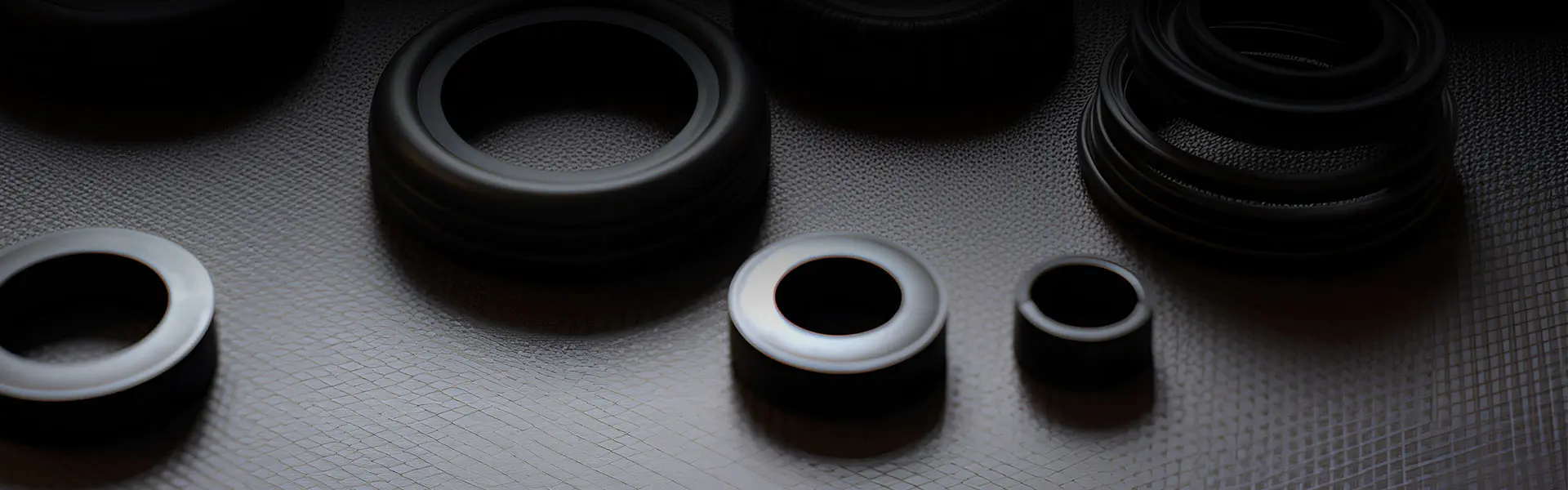
PTFE Gaskets, or Polytetrafluoroethylene Gaskets, are critical sealing components renowned for their exceptional chemical resistance and stability across a vast temperature range. Made from a high-performance fluoropolymer, these gaskets create a reliable barrier against leaks in piping systems, chemical processing equipment, and various industrial assemblies. Their unique properties stem from PTFE's virtually inert molecular structure, making them the go-to choice for sealing in the most aggressive and demanding environments where other elastomers would fail. Kaxite leverages advanced manufacturing techniques to produce PTFE gaskets that offer superior performance, longevity, and reliability, ensuring your operations run smoothly without unscheduled downtime due to seal failure.
Our gaskets are engineered to provide unmatched value. Here are the core benefits:
Understanding the technical data is crucial for selecting the correct gasket. Below are the detailed specifications for standard Kaxite Virgin PTFE Gasket Material.
| Property | Test Method | Unit | Value / Range |
|---|---|---|---|
| Specific Gravity | ASTM D792 | - | 2.15 - 2.20 |
| Tensile Strength | ASTM D638 | MPa (psi) | 25.0 - 35.0 (3,600 - 5,100) |
| Elongation at Break | ASTM D638 | % | 300 - 500 |
| Compression Set (22 hrs @ 25°C) | ASTM D395 | % | 40 - 60 |
| Continuous Service Temperature | - | °C (°F) | -200 to +260 (-328 to +500) |
| Thermal Conductivity | ASTM C177 | W/m·K | 0.25 |
| Coefficient of Linear Thermal Expansion | ASTM D696 | cm/cm·°C x 10-5 | 12.0 |
| Dielectric Strength | ASTM D149 | kV/mm | 19.7 |
Kaxite offers a comprehensive range of PTFE gasket types to suit every application requirement.
Q: What is the main difference between Virgin PTFE and Filled/Reinforced PTFE gaskets?
A: Virgin PTFE is pure polytetrafluoroethylene and offers the absolute best chemical resistance and electrical properties. However, it is susceptible to "cold flow" or creep under sustained pressure. Filled or reinforced PTFE incorporates additives (e.g., glass, carbon, graphite) to improve mechanical properties—significantly reducing creep, increasing hardness and wear resistance, and enhancing thermal conductivity. The choice depends on whether chemical purity or mechanical strength is the primary concern for your application.
Q: Can PTFE gaskets be used for high-pressure applications?
A: While PTFE has many strengths, its tendency to cold flow can be a limitation in very high-pressure, high-bolt-load applications. For such scenarios, Kaxite recommends using reinforced PTFE grades or PTFE-encapsulated gaskets. These designs resist extrusion and maintain seal integrity much better under high pressure. Always consult our engineering team with your specific pressure, temperature, and media details for a correct recommendation.
Q: How do I install a PTFE gasket correctly?
A: Proper installation is key. Ensure flange faces are clean, smooth, and free of scratches. Align the gasket carefully between the flanges. Use a crisscross bolt tightening pattern (torque sequence) to apply load evenly. Gradually increase torque in multiple passes to the specified value, which is crucial to avoid over-compressing the gasket and causing cold flow or under-compressing and causing a leak. Always refer to the equipment manufacturer's or Kaxite's provided torque specifications.
Q: Are PTFE gaskets suitable for food, pharmaceutical, or drinking water contact?
A: Yes, absolutely. Kaxite's Virgin PTFE compounds are manufactured to meet stringent FDA 21 CFR 177.1550 and USP Class VI standards. This makes them safe and approved for use in food processing, pharmaceutical manufacturing, biotechnology, and potable water systems where product purity and non-toxicity are mandatory.
Q: What causes a PTFE gasket to fail, and how can it be prevented?
A: Common failure modes include excessive creep (cold flow) leading to loss of sealing stress, chemical attack from extremely rare permeating agents (like molten alkali metals), and installation errors. Prevention involves: 1) Selecting the right PTFE grade (e.g., reinforced for high stress), 2) Ensuring correct flange design and surface finish, 3) Applying precise and even bolt torque, and 4) Verifying chemical compatibility for your specific process media. Kaxite's technical support can help with all these steps.
Q: Can you manufacture custom PTFE gaskets with short lead times?
A: Yes. Kaxite specializes in rapid prototyping and production of custom PTFE sealing solutions. With state-of-the-art CNC machining, die-cutting, and skiving equipment, we can produce gaskets in non-standard sizes, intricate shapes, and with specific filler compositions. Contact our sales team with your drawings or specifications for a fast quote and lead time assessment.


