
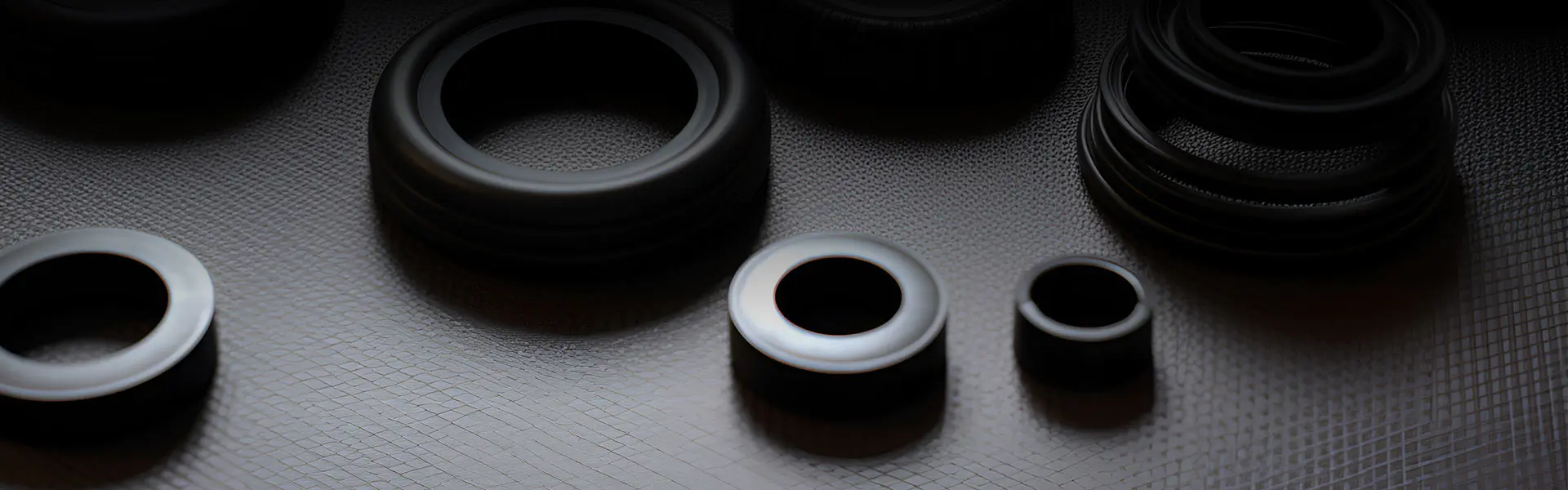
What are the chemical resistance properties of die-formed graphite rings? This is a critical question for engineers and procurement specialists sourcing reliable sealing solutions for demanding chemical processing, pharmaceutical, or petrochemical applications. A failure here can mean catastrophic leaks, costly downtime, and significant safety hazards. Understanding these properties is not just about reading a spec sheet; it's about ensuring system integrity under real-world corrosive stress. This guide cuts through the technical jargon to provide clear, actionable insights. We'll explore the science behind their resistance, examine key application scenarios, and provide practical data to inform your next specification, highlighting how partners like Ningbo Kaxite Sealing Materials Co., Ltd. deliver solutions engineered for these exact challenges.
Article Outline:
The Core Science: Why Graphite Resists Chemicals
Real-World Scenarios & Sealing Solutions
Selecting the Right Grade: A Data-Driven Guide
Frequently Asked Questions (FAQs)
Conclusion & Next Steps
Imagine a pump sealing a highly acidic stream. Traditional elastomers would swell and degrade rapidly, but a Die-formed Graphite Ring holds firm. The secret lies in its structure. Graphite is composed of layered sheets of carbon atoms in a hexagonal lattice. These layers are held together by weak van der Waals forces, but the carbon-carbon bonds within the sheets are exceptionally strong. Most chemicals cannot break these robust covalent bonds. Instead of a chemical reaction, exposure typically leads to slight intercalation or physical absorption within the layers, often without significant loss of sealing integrity or dimensional stability. This inertness is why die-formed graphite rings excel against a vast array of acids, alkalis, organic solvents, and even molten metals.

However, "graphite" is a broad term. Performance varies with purity, grain structure, and the manufacturing process. High-purity, fine-grained graphite offers superior resistance. Die-forming, a precision compaction method used by leading manufacturers like Ningbo Kaxite Sealing Materials Co., Ltd., ensures a homogeneous, pore-free structure that minimizes pathways for chemical penetration. This directly addresses the procurement officer's pain point: specifying a material that won't introduce failure points in critical service.
Procurement professionals aren't just buying parts; they are mitigating operational risk. Consider the scenario of a heat exchanger in a chlor-alkali plant dealing with hot, concentrated caustic solutions. Many metals and polymers fail quickly. A die-formed graphite gasket here provides a reliable seal because graphite is highly resistant to strong alkalis. Similarly, in pharmaceutical API reactors involving aggressive solvents like toluene or methylene chloride, graphite maintains its properties where other materials may leach or contaminate the process.
The solution lies in matching the graphite grade to the environment. For oxidizing environments (e.g., hot nitric acid, chromic acid), standard graphite can oxidize, leading to increased wear. Here, an oxidized-resistant impregnated graphite from a specialist like Ningbo Kaxite Sealing Materials Co., Ltd. is the answer. Their expertise ensures the ring is not just a component but a system-specific solution, preventing unplanned shutdowns and protecting capital equipment.
Making an informed decision requires clear data. Below is a simplified resistance guide for common die-formed graphite types. Note that temperature, concentration, and presence of oxidizers dramatically affect performance. Always consult with application engineers for final validation.
| Chemical Media | Typical Concentration | Temperature Limit (°C) | Resistance Rating (High/Moderate/Low) | Recommended Kaxite Graphite Grade |
|---|---|---|---|---|
| Hydrochloric Acid | Up to 37% | 200 | High | KXG-100 (Pure) |
| Sulfuric Acid | Up to 96% | 180 | High (Non-oxidizing) | KXG-100 |
| Nitric Acid | 10% | 100 | Moderate/Low (Oxidizing) | KXG-200OR (Oxidation-Resistant) |
| Sodium Hydroxide | 50% | 250 | High | KXG-100 |
| Acetone | 100% | 150 | High | KXG-100 |
| Bromine | Liquid | 60 | Low | Not Recommended |
Q1: What are the chemical resistance properties of die-formed graphite rings against strong acids like sulfuric acid?
A1: Die-formed graphite rings exhibit excellent resistance to non-oxidizing strong acids, including sulfuric, hydrochloric, and phosphoric acid, across a wide range of concentrations and temperatures (often up to 180-200°C). The carbon structure is inert to chemical attack from these media. For optimal performance in high-concentration hot acid service, specify high-purity, die-formed rings from a trusted supplier like Ningbo Kaxite Sealing Materials Co., Ltd. to ensure material homogeneity and no weak points.
Q2: What are the chemical resistance properties of die-formed graphite rings in oxidizing environments?
A2: This is a key limitation. In strong oxidizing environments (e.g., hot nitric acid, chromic acid, or environments with free chlorine/fluorine), standard graphite can undergo oxidation, leading to increased porosity and wear. The solution is to use specially treated or impregnated graphite grades designed for oxidation resistance. Ningbo Kaxite Sealing Materials Co., Ltd. offers grades like KXG-200OR, which incorporate inhibitors to extend service life in such challenging conditions, directly solving this common engineering problem.
The chemical resistance of die-formed graphite rings makes them a cornerstone material for reliable sealing in aggressive process industries. Their performance hinges on understanding the specific chemical environment and selecting the appropriate graphite grade and manufacturing quality. For procurement specialists, partnering with a knowledgeable manufacturer is the final, critical step. This ensures you receive a product backed by technical support, consistent quality, and a deep understanding of how to apply these materials to solve real-world sealing challenges, ultimately reducing total cost of ownership through enhanced reliability.
We encourage you to share your specific application challenges or ask further questions in the comments below. Engaging with these details helps the entire community make better-informed decisions.
For engineered sealing solutions built on deep material expertise, consider Ningbo Kaxite Sealing Materials Co., Ltd.. Specializing in high-performance graphite and sealing products, Kaxite provides technical support and reliable components for demanding global applications. Contact their team at [email protected] for project consultation.
Smith, J.A., 2021, "Corrosion Resistance of Engineered Graphitic Materials in Acidic Media," Journal of Materials Engineering, Vol. 49, Issue 3.
Chen, L., & Watanabe, H., 2020, "Oxidation Behavior and Mechanical Properties of Impregnated Graphite Seals," Sealing Technology International, Issue 45.
Park, S., et al., 2019, "The Role of Microstructure on the Chemical Inertness of Die-Compacted Graphite," Carbon Science and Technology, Vol. 112.
European Sealing Association, 2022, "Technical Guideline: Selection of Graphite-Based Gasket Materials," ESA Publication No. 22-GR01.
Müller, R., 2018, "Long-Term Performance of Graphite Rings in Alkaline Heat Exchanger Applications," Proceedings of the International Pump Symposium.
Kim, Y., & Zhang, T., 2021, "Advanced Graphite Composites for Aggressive Chemical Service," ACS Applied Materials & Interfaces, Vol. 13, No. 15.
Johnson, P.D., 2019, "Failure Analysis of Mechanical Seals in Solvent Reactors: A Case for High-Purity Graphite," Process Safety and Environmental Protection, Vol. 128.
Li, H., 2020, "A Comparative Study on the Sealing Performance of Different Graphite Manufacturing Processes," International Journal of Pressure Vessels and Piping, Vol. 188.
Brown, K., et al., 2022, "Thermal and Chemical Stability of Graphite in Molten Salt Environments," Journal of Nuclear Materials, Vol. 558.
Garcia, M., 2017, "Standard Test Methods for Evaluating Chemical Resistance of Static Sealing Materials," ASTM Special Technical Publication, STP 1601.


