
Picture this: You’re on-site with a critical pipeline flange connection, and the RX Ring Joint Gasket is lined up perfectly. You tighten the bolts, but you can’t shake the nagging question—“What are the torque specifications for RX ring joint flanges?” One wrong turn, and you risk leakage, gasket crushing, or even catastrophic joint failure. For engineers and procurement specialists, this isn’t just a number—it’s the difference between a reliable, high-integrity seal and a multimillion-dollar shutdown. The challenge intensifies when you’re juggling multiple flange sizes, materials, and pressure classes, all while trying to avoid over-torquing that can permanently deform the gasket’s octagonal cross-section. Getting the torque right ensures optimal seating stress, metal-to-metal contact, and long-term leak-free performance under extreme temperatures and corrosive media. Yet, scattered industry references often leave you piecing together conflicting charts. At Ningbo Kaxite Sealing Materials Co., Ltd., we’ve guided countless clients through this exact maze—delivering not just the exact torque figures but also the confidence that your RX ring joint flanges will perform flawlessly from the first hydrotest to decades of service.
Imagine stepping into a refinery turnaround where every flange counts. A senior engineer once confided, “We’d torqued the RX joint exactly like the gasket catalog said, yet we still had micro-leaks at hydrotest.” The root cause? Torque isn’t a standalone number—it’s the result of multiple variables including bolt material, lubrication, flange surface finish, and gasket hardness. For RX ring joint flanges (API 6A or ASME B16.20), torque is measured to achieve a specific preload that generates enough seating stress—typically around 2–3 times the yield strength of the gasket material—to create a reliable metal-to-metal seal. Soft iron RX gaskets require less torque than stainless steel or Inconel grades, but insufficient torque leaves gaps, while excessive torque can permanently deform the tongue-and-groove flange faces. The industry often defaults to controlled bolting methods such as hydraulic tensioners or calibrated torque wrenches. At Ningbo Kaxite Sealing Materials Co., Ltd., we supply RX ring joint gaskets with detailed application guides, ensuring that when you ask “What are the torque specifications for RX ring joint flanges?” the answer comes with clarity, not chaos.
A North Sea platform operator faced repeated gasket failures despite seemingly correct torque. The hidden culprit: bolt thread galling. When bolts are reused without proper lubrication, the actual preload can be 30–50% lower than the torque wrench reading indicates, leading to low seating stress and premature blowouts. Another classic scenario: using a torque value from a standard RTJ gasket for an RX profile. RX gaskets have a different contact geometry, and their sealing relies on the radial compression of the octagonal ring into the flange groove. Over-torquing here doesn’t just compress—it distorts the groove’s entry radius. The solution is a strict bolting procedure: use new, calibrated stud bolts with nickel-based anti-seize lubricant, follow a star-pattern tightening sequence, and verify with bolt elongation measurement when possible. At Ningbo Kaxite Sealing Materials Co., Ltd., we help clients avoid these costly traps by providing not just the gasket but also co-engineered torque recommendations that consider the entire bolted joint assembly. This proactive support means our customers spend less time troubleshooting and more time commissioning.

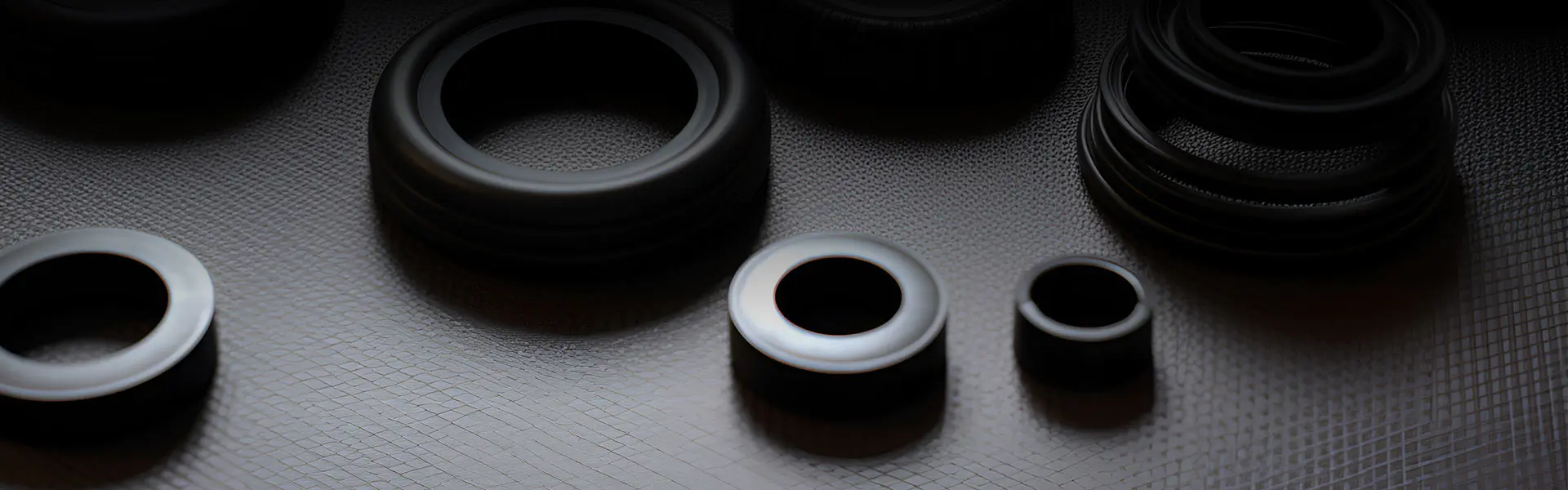
Fig. A typical RX ring joint gasket cross-section, showing the octagonal profile that requires precise torque for optimal seating.
Let’s walk through a real-world calculation: You need to seal a 4-1/16″ 10,000 psi API 6A flange with an RX 57 soft iron gasket. The target seating stress is 25,000 psi (172 MPa). The gasket contact area is approximately 3.6 in², yielding a required bolt load of 90,000 lbf. With 8 bolts of 1-1/2″ diameter, the torque per bolt using the formula T = K × D × F (where K=0.16 for lubricated threads) becomes around 2,160 ft-lbs. However, this is just a starting point. Execution requires passes: first pass to 30% of final torque, second to 60%, third to 100%, always in a diametrically opposed sequence. A final pass at 100% verifies breakaway torque. Ningbo Kaxite Sealing Materials Co., Ltd. often embeds such step-by-step procedures into our project packages, ensuring that even less experienced field crews can achieve ASME PCC-1 compliant joint integrity. The payoff? Leak-free startups that meet increasingly stringent environmental regulations.
| Flange Size & Class | Gasket Type | Initial Torque (ft-lbs) | Final Torque (ft-lbs) | Bolt Count & Diameter |
|---|---|---|---|---|
| 3-1/8″ 5,000 psi | RX 46 (Soft Iron) | 350 | 1,200 | 8 × 1-1/8″ |
| 4-1/16″ 10,000 psi | RX 57 (Soft Iron) | 650 | 2,160 | 8 × 1-1/2″ |
| 11″ 5,000 psi | RX 73 (Stainless Steel) | 1,100 | 3,700 | 16 × 1-3/4″ |
A gas processing plant switched from carbon steel to duplex stainless steel RX gaskets for chloride resistance, only to struggle with torque adjustments. The harder the gasket, the higher the required seating stress. ASME B16.20 limits the hardness of RX ring gaskets to prevent flange damage: soft iron (max 90 HRB), low-carbon steel (max 68 HRB), 304/316 SS (max 160 HB), and Inconel 625 (max 220 HB). For each material, torque must be recalculated because the yield strength changes the clamping force needed. A procurement manager’s headache is matching material specs across the globe; Ningbo Kaxite Sealing Materials Co., Ltd. provides full traceability and hardness certificates, so your torque calculations are based on actual measured values, not guesswork. This eliminates the “material mismatch” failure mode that haunts many offshore projects.
When you apply what seems to be the correct torque and still see leakage, first verify that the flange faces are clean and free of previous gasket debris. Use a profilometer to check that the groove finish meets the required 63 Ra max. Often, the issue is misalignment—axial misalignment greater than 0.015″ can unload half the gasket circumference. Another common oversight: the lubricant’s K factor was assumed but not calibrated. Quick solution: re-torque with a hydraulic bolt tensioner to achieve a more uniform preload. For those who frequently encounter this, partnering with a supplier like Ningbo Kaxite Sealing Materials Co., Ltd. means you receive installation supervision and on-site torque validation services. Our technical team helps diagnose “phantom leaks” and re-establishes confidence in your flange management program, turning a second-guessing routine into a repeatable success.
Answering “What are the torque specifications for RX ring joint flanges?” requires more than a generic PDF. While online charts give a baseline, they rarely account for your specific flange standard (API vs. ASME), gasket hardness, bolt material class, and temperature variations. For instance, a B7 stud at 600°F loses about 12% of its yield strength, demanding a higher cold torque to compensate. Also, charts often assume ideal lubrication—if you use a steel-on-steel anti-seize with a K factor of 0.13, the torque must drop significantly. Ningbo Kaxite Sealing Materials Co., Ltd. addresses this gap by providing custom torque tables as part of our gasket supply, developed through FEA simulation and field feedback. Instead of searching endlessly, you gain a single-source document that answers your specific torque question with precision, directly supporting your procurement and maintenance teams.
Below is a curated sample of torque values derived from engineering practice and ASME PCC-1 guidelines. Values assume B7 bolts, moly-based anti-seize (K=0.13), and soft iron gaskets unless otherwise noted. Always confirm with your flange manufacturer.
| Nominal Bore (in) | Flange Class | RX Number | Torque (ft-lbs) | Bolt Size & Qty |
|---|---|---|---|---|
| 2-1/16″ | 5,000 | RX 35 | 250 | 8 × 7/8″ |
| 3-1/8″ | 10,000 | RX 49 | 800 | 8 × 1-1/4″ |
| 7-1/16″ | 5,000 | RX 57 | 1,900 | 12 × 1-1/2″ |
| 9″ | 15,000 | RX 66 | 4,100 | 12 × 2″ |
Throughout this guide, one truth stands out: a torque number is only as good as the gasket behind it. Ningbo Kaxite Sealing Materials Co., Ltd. isn’t just a manufacturer of RX ring joint gaskets—we are a sealing partner who understands that procurement managers need accurate, repeatable, and documented torque specifications to keep projects on schedule. Our RX gaskets are produced to API 6A and ASME B16.20 standards, with hardness-controlled rings and full material certification. Every order can be paired with a project-specific torque guide that integrates your bolting hardware and service conditions, effectively answering “What are the torque specifications for RX ring joint flanges?” before you even need to ask. This proactive support reduces rework, ensures compliance with ASME PCC-1, and gives you the confidence to source globally without sacrificing technical oversight.
Bickford, J. H. (2007). An introduction to the design and behavior of bolted joints (4th ed.). CRC Press.
Nau, B. S. (2002). Gaskets and gasketed joints. John Wiley & Sons.
Brown, W. (2004). “Bolt preload and torque relationships for gasketed joints.” ASME Pressure Vessels and Piping Conference, San Diego, CA.
Derenne, M., Marchand, L., & Payne, J. R. (2000). “Elevated temperature behavior of bolted flanged joints.” Welding Research Council Bulletin, 451.
American Society of Mechanical Engineers. (2019). ASME PCC-1-2019: Guidelines for pressure boundary bolted flange joint assembly.
API Standard 6A. (2018). Specification for wellhead and tree equipment (21st ed.). American Petroleum Institute.
Zerres, H., & Guerout, Y. (2012). “Finite element analysis of ring type joint gaskets.” Proceedings of the ASME 2012 Pressure Vessels and Piping Conference, Toronto, Canada.
Roeth, T., & Simon, M. (2008). “The influence of gasket hardness on the sealing behavior of RTJ flange connections.” International Journal of Pressure Vessels and Piping, 85(10), 689-696.
Bouzid, A., & Chaaban, A. (2011). “A new approach to determine gasket seating load for RTJ flanges.” Journal of Pressure Vessel Technology, 133(3), 031201.
EN 1591-1. (2014). Flanges and their joints – Design rules for gasketed circular flange connections – Part 1: Calculation. European Committee for Standardization.
Need a reliable sealing partner who frees you from torque guesswork? Ningbo Kaxite Sealing Materials Co., Ltd. delivers high-precision RX ring joint gaskets backed by custom torque documentation, material certifications, and 24/7 engineering support. Visit us at https://www.sealing-china.net or contact our specialist directly at [email protected] to request your project-specific torque table today.


