
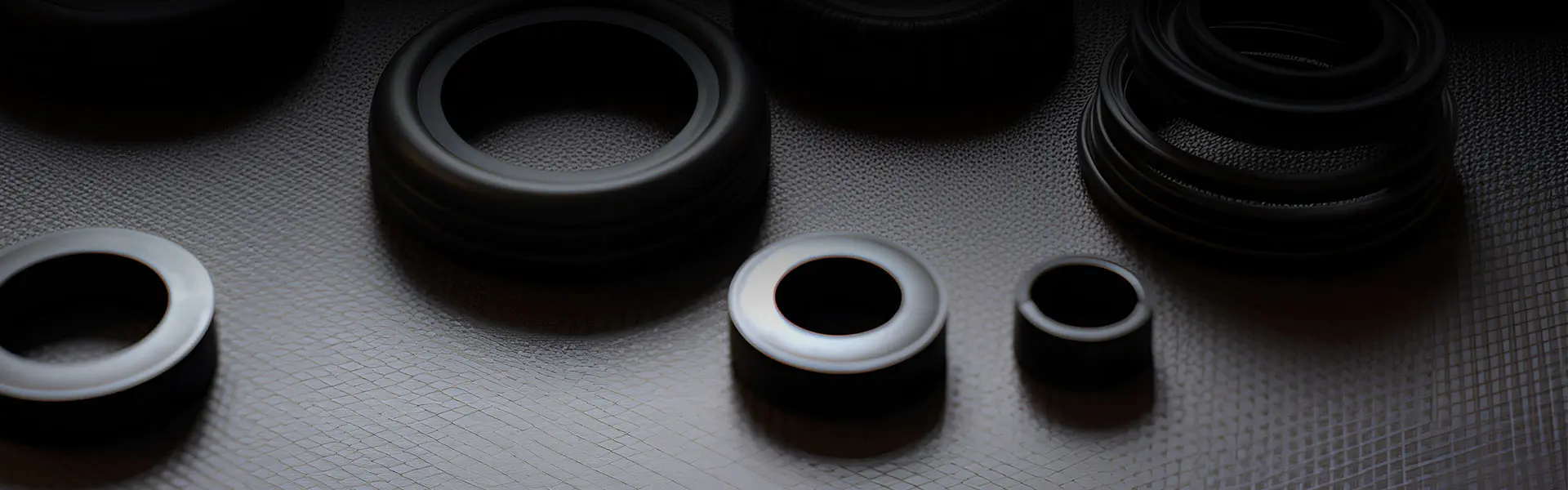
In high-performance industrial sealing, where extreme temperatures, aggressive media, and relentless pressure are the norm, standard materials often fall short. The sealing component must be more than just a barrier; it must be a reliably engineered solution. This is where the precision and performance of Die-formed graphite rings excel. At Kaxite, we specialize in manufacturing premium-grade die-formed graphite rings, leveraging decades of metallurgical and material science expertise to deliver seals that define reliability and longevity. Unlike machined rings, our die-forming process involves compacting high-purity flexible graphite foil into precision steel dies under tremendous pressure. This method creates a ring with a uniform, dense, and consistent structure, eliminating the variances and potential weaknesses inherent in machining. The result is a sealing component with superior scalability, minimal creep relaxation, and exceptional performance across a vast spectrum of challenging applications.
The Kaxite advantage lies in our control over the entire process—from sourcing the raw graphite to final quality inspection. Our rings are not merely products; they are engineered solutions designed to solve specific sealing challenges in industries such as chemical processing, power generation, oil & gas, and aerospace. The die-forming technique allows for exceptional consistency in dimensional accuracy and density, which directly translates to predictable and repeatable sealing behavior in the field.
Understanding the precise specifications of a die-formed graphite ring is crucial for correct selection and optimal performance. Below are the key parameters that define Kaxite rings.
| Inside Diameter (ID) Range | Cross-Section Widths Available | Standard Density | Maximum Recommended Pressure (PSI) | ASME / API Standard Compliances |
|---|---|---|---|---|
| 0.25" to 120" (6mm to 3000mm) | 0.0625", 0.125", 0.1875", 0.25", Custom | 1.1 g/cm³ to 1.9 g/cm³ | Up to 3000 PSI (dependent on width, density, and reinforcement) | ASME B16.20, API 6A, API 607 |
For engineers and procurement specialists, a deeper dive into the parameters ensures the seal integrates perfectly into the system design.
| Parameter | Description & Kaxite Specification | Impact on Performance |
|---|---|---|
| Graphite Purity | Kaxite uses graphite with ≥99.9% carbon content. Sulfur content is controlled to <500 ppm for low-corrosion applications. | High purity ensures superior chemical resistance and prevents galvanic corrosion when in contact with metals. Low sulfur is critical for sensitive environments like nuclear or semiconductor. |
| Density | Manufactured from 1.1 g/cm³ (standard) up to 1.9 g/cm³ (high-density). Density is controlled uniformly throughout the ring profile. | Higher density provides greater mechanical strength, lower creep relaxation, and higher blowout resistance. Standard density offers optimal balance of sealability and conformability. |
| Tensile Strength | Ring tensile strength ranges from 1200 PSI (plain) to over 2500 PSI (reinforced). Measured via radial crush test. | Critical for handling and installation without damage. Higher tensile strength is essential for large-diameter rings or automated installation processes. |
| Leakage Rate | Tested per ASTM F37 standards. Kaxite rings achieve helium leak rates <1 x 10⁻⁶ std cm³/sec. | Quantifies the sealing efficiency. This ultra-low leakage rate meets the stringent requirements of volatile organic compound (VOC) services and hazardous fluid containment. |
| Creep Relaxation | Typically <15% after 24 hours at rated temperature and pressure (ASTM F38). Kaxite's high-density rings show <10%. | Lower creep relaxation means the gasket maintains bolt load longer, reducing the need for re-torquing and ensuring a lasting seal. | Oxidation Resistance | Enhanced grades available with proprietary inhibitors to extend service life in oxidizing atmospheres up to 1000°F (538°C). | Prevents premature degradation and seal failure in applications involving steam, air, or other oxidizing gases at elevated temperatures. |
Q: What is the primary advantage of a die-formed graphite ring over a machined ring?
A: The primary advantage is structural consistency and uniformity. Machining can create slight variations in density and may induce micro-fractures along the grain direction. The die-forming process compresses the graphite isotropically in a mold, resulting in a ring with homogenous density throughout its entire cross-section. This eliminates weak points, ensures even stress distribution under bolt load, and provides more predictable, reliable sealing performance with minimal leakage paths.
Q: Can Kaxite die-formed graphite rings be used for fire-safe applications?
A: Absolutely. Our die-formed graphite rings, especially when manufactured with specific high-purity grades and appropriate densities, inherently meet the requirements of major fire-safe testing standards such as API 607 and ISO 10497. Graphite does not melt and retains its structural integrity at extremely high temperatures, preventing catastrophic blowout in the event of a fire. We can provide rings with formal fire-safe certification for qualifying projects.
Q: How do I select the correct density for my application?
A: Density selection is based on service conditions. For standard flanges with good surface finish at moderate temperatures and pressures (up to ~1000°F and 1500 PSI), our standard density (1.1-1.5 g/cm³) is often sufficient. Choose high-density (1.7-1.9 g/cm³) for: higher pressure systems (>2000 PSI), poor flange surface conditions (to resist extrusion), systems with significant thermal or pressure cycling (for lower creep), and for superior chemical penetration resistance. Our engineering team can assist with this critical selection.
Q: Are these rings suitable for aggressive chemicals like strong acids or alkalis?
A: Yes, Kaxite graphite rings offer exceptional chemical resistance. High-purity graphite is inert to most chemicals across the 0-14 pH range. This includes concentrated acids (hydrochloric, sulfuric, phosphoric) and strong alkalis. The main exceptions are strongly oxidizing agents like fuming nitric acid, concentrated sulfuric acid above certain temperatures, and potent oxidizers like chlorine trifluoride. For such services, we recommend a detailed consultation to review exact conditions.
Q: What is the purpose of a metallic inlay or insert in a die-formed ring?
A: Metallic inlays (stainless steel, monel, titanium) serve two main purposes. First, they significantly increase the ring's mechanical strength and handling robustness, preventing breakage during shipping and installation, which is crucial for large-diameter or thin-section rings. Second, the metal can act as a compression limiter, preventing over-compression and potential crushing of the graphite in low-flange-load scenarios, thereby optimizing seal life.
Q: How does temperature affect the installation torque for flanges using these rings?
A: Installation torque should follow standard bolt torque procedures for the flange rating and bolt size. However, a critical consideration is re-torquing after the initial heat cycle. As the system heats to operating temperature, the graphite ring will experience slight thermal expansion, and the bolts may relax. It is a standard and recommended practice to re-torque the flange bolts after the system has reached operating temperature and then cooled back to ambient. This compensates for any initial settling and creep, ensuring a tight seal for the long term.
Q: Can you provide custom shapes beyond standard round rings?
A: Yes, one of the key benefits of the die-forming process at Kaxite is its adaptability to custom geometries. We routinely produce oval, oblong, rectangular, and other non-standard shaped rings. The die-forming process ensures these custom shapes maintain the same uniform density and structural integrity as our standard rounds. We work from customer-supplied drawings to create precision molds for both prototype and production quantities.


