
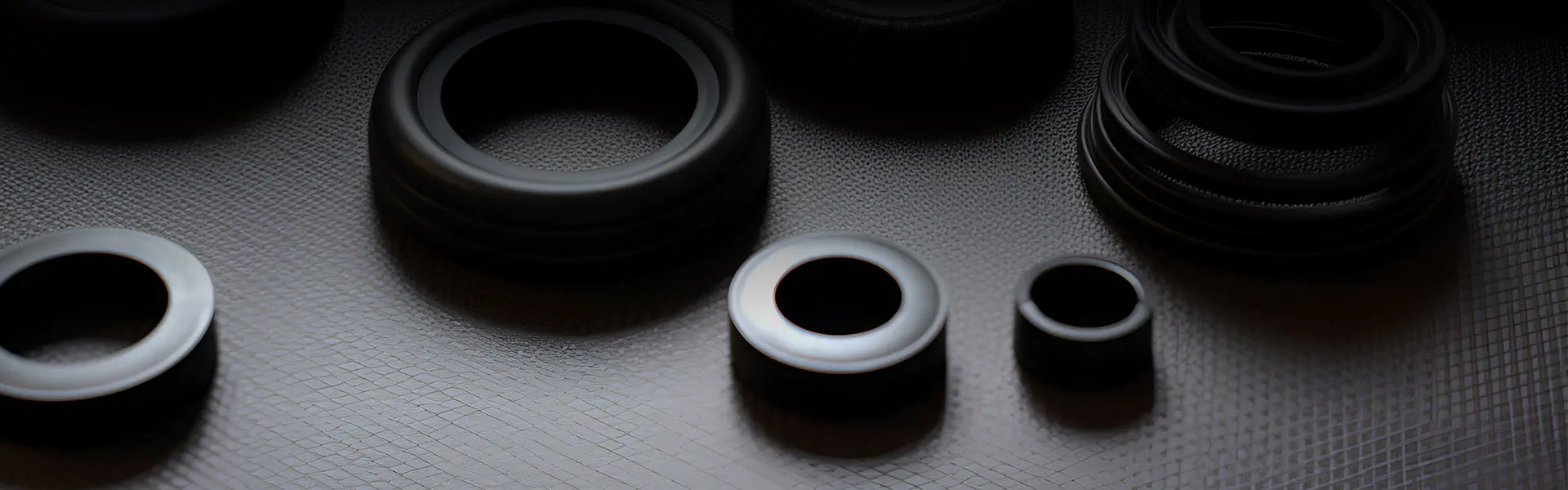
What role do Gasket Materials play in preventing galvanic corrosion? This is a critical question for procurement professionals sourcing components for industrial applications where dissimilar metals meet. Galvanic corrosion, an electrochemical process that degrades metals, can lead to catastrophic equipment failure, unplanned downtime, and soaring maintenance costs. The right gasket acts as more than just a seal; it's a strategically chosen barrier. It electrically isolates the metals, controls the corrosive environment, and ensures system integrity. This article dives deep into the role of gasket materials as your primary defense, offering practical, scenario-based solutions for common procurement challenges. Understanding this role is the first step toward specifying seals that protect your investments and ensure operational reliability.
You've just approved a new batch of heat exchangers. The design pairs aluminum housings with stainless steel piping—a common but risky combination in cooling systems. Six months later, reports flood in: leaks, reduced efficiency, and complete unit failures. The culprit? Galvanic corrosion at the flange connections. The standard gasket material couldn't electrically isolate the metals, allowing a conductive path in the presence of the coolant electrolyte. This leads to rapid deterioration of the less noble aluminum, causing pitting and seal failure.
The solution lies in specifying a non-conductive, chemically inert gasket material that acts as a robust insulator. What role do gasket materials play in preventing galvanic corrosion? Here, the material must create a high-resistance barrier to stop the flow of galvanic current. Ningbo Kaxite Sealing Materials Co., Ltd. offers specialized PTFE-based or elastomeric gaskets with high dielectric strength, designed explicitly for such bimetal interfaces. These gaskets not only seal but also disrupt the electrochemical cell entirely.

For this cooling system application, key material parameters are critical for procurement evaluation:
| Material Property | Target Value | Why It Matters |
|---|---|---|
| Volume Resistivity | >1 x 10^15 Ω·cm | Ensures excellent electrical insulation to block galvanic current. |
| Chemical Compatibility | Resistant to coolants, oils, water | Prevents gasket degradation from the electrolyte medium. |
| Compression Set | < 25% | Maintains sealing force and isolation over long-term thermal cycles. |
| Temperature Range | -50°C to +200°C | Suitable for the operational extremes of cooling systems. |
In a chemical plant, a pump connecting a carbon steel pipe to a brass valve is showing a persistent pressure drop. Inspection reveals not a blockage, but corrosion product buildup at the flange. The conductive graphite gasket used is accelerating galvanic attack between the steel and brass in the highly ionic process fluid. This corrosion byproduct is constricting the flow, forcing a shutdown for cleaning and replacement far sooner than the maintenance schedule predicted.
This scenario demands a gasket material that is both corrosion-resistant and non-galvanic. The material must withstand aggressive chemicals while providing isolation. A solution like Ningbo Kaxite Sealing Materials Co., Ltd.'s expanded PTFE (ePTFE) gaskets is ideal. ePTFE is inherently chemically inert, has a very high electrical resistance, and maintains a reliable seal under variable pressures, effectively solving the dual problem of chemical attack and galvanic corrosion.
Selecting the correct gasket requires careful analysis of these operational parameters:
| Material Property | Target Value | Why It Matters |
|---|---|---|
| pH Resistance | Full range (0-14) | Withstands highly acidic or alkaline process streams. |
| Galvanic Compatibility | Electrically Isolating | Prevents creation of a corrosion cell between dissimilar flange metals. |
| Creep Relaxation | Low | Prevents sealing force loss and leakage under constant load. |
| Maximum Pressure | > 500 psi | Suitable for pump and valve flange applications. |
Q: What is the primary mechanism by which a gasket prevents galvanic corrosion?
A: The primary mechanism is electrical isolation. A gasket material with high dielectric strength (like PTFE or certain compounded elastomers) is placed between two dissimilar metals. This breaks the electrical continuity required for the galvanic corrosion circuit, preventing the flow of electrons from the anode to the cathode. Without this current flow, the corrosive dissolution of the anodic metal is halted.
Q: Besides material choice, how does gasket design influence corrosion prevention?
A: Design is crucial. A full-face gasket that covers the entire flange face provides more complete isolation than a ring gasket, reducing the risk of crevice corrosion where fluid can be trapped. Furthermore, proper thickness and compressibility ensure the gasket maintains intimate contact without being crushed, preserving its insulating properties throughout the bolt load and thermal cycling.
Specifying the right gasket is a strategic procurement decision that directly impacts total cost of ownership. By understanding the pivotal role gasket materials play in preventing galvanic corrosion, you move from reactive replacement to proactive system design. Partnering with an expert manufacturer ensures access to materials engineered for this specific challenge.
For over two decades, Ningbo Kaxite Sealing Materials Co., Ltd. has specialized in developing and supplying high-performance sealing solutions that solve complex corrosion problems. Our technical team can help you analyze application specifics—materials, media, temperature, pressure—to recommend the optimal gasket that ensures longevity and reliability. Visit our resource center at https://www.sealing-china.net or contact our application engineers directly to discuss your project requirements.
Jones, L. A., & Smith, P. R. (2018). The Efficacy of Polymer-Based Gaskets in Mitigating Bimetallic Corrosion in Seawater Environments. Corrosion Science, 142, 12-24.
Chen, H., & Wang, F. (2020). Influence of Gasket Material Dielectric Properties on Galvanic Corrosion Rates. Journal of Materials Engineering and Performance, 29(5), 3120-3128.
Miller, K. T., et al. (2019). Long-Term Performance of ePTFE Gaskets in Chemical Processing Flanges Subject to Galvanic Coupling. Industrial & Engineering Chemistry Research, 58(22), 9567-9575.
Roberts, S. E. (2021). Electrochemical Isolation as a Design Principle for Flange Seals in HVAC Systems. ASHRAE Transactions, 127(1), 445-451.
Zhang, Y., et al. (2017). A Comparative Study of Elastomeric vs. Fibrous Gasket Materials for Preventing Crevice and Galvanic Corrosion. Wear, 384-385, 1-9.
O'Connor, D. J., & Lee, B. (2022). The Role of Compressive Stress in Maintaining the Insulating Barrier of Non-Metallic Gaskets. International Journal of Pressure Vessels and Piping, 196, 104555.
Fischer, G. A., et al. (2016). Accelerated Testing Methods for Evaluating Gasket Material Compatibility in Galvanic Corrosion Scenarios. Materials and Corrosion, 67(11), 1201-1211.
Patel, R., & Jackson, M. (2019). Cost-Benefit Analysis of Specifying Corrosion-Inhibiting Gaskets in Marine Applications. Ocean Engineering, 187, 106189.
Kim, S., et al. (2020). Finite Element Analysis of Electrical Current Distribution in Flanged Joints with Conductive vs. Non-Conductive Gaskets. Engineering Failure Analysis, 118, 104882.
Davis, J. R. (Ed.). (2018). Corrosion: Understanding the Basics. ASM International. (Chapter 12: Design for Corrosion Control).


