
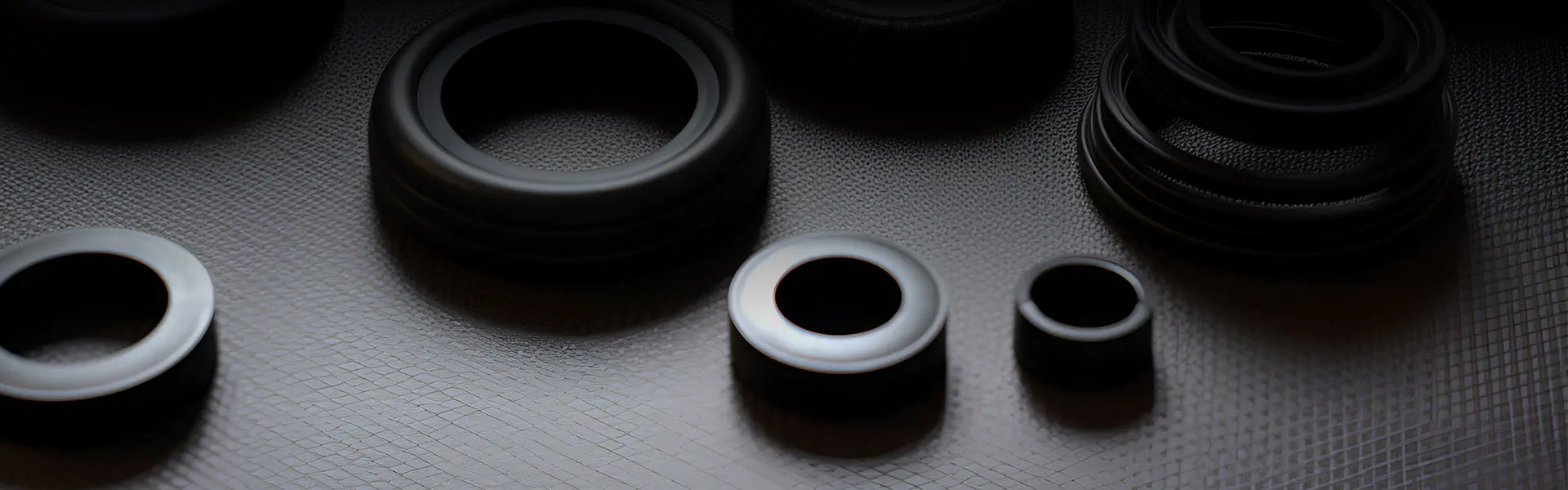
If you're a purchasing agent sourcing parts, you know that even the smallest, simplest component can be the difference between a project's success and a costly failure. Rubber gaskets are the unsung heroes of industrial assembly, tasked with a critical mission: creating a seal. They prevent leaks, block contaminants, and absorb vibrations in countless applications. From the piping in a chemical plant to the engine in your car, the reliability of the entire system often hinges on the performance of these seemingly humble parts. Choosing the right one requires understanding its specific role and the demanding environment it must endure. This guide will break down the core uses of rubber gaskets, tackle common sourcing challenges, and introduce how a specialist supplier like Ningbo Kaxite Sealing Materials Co., Ltd. provides targeted solutions.
As a procurement specialist, you're not just buying a piece of rubber; you're purchasing performance insurance. A common pain point is specifying a gasket for a "standard" application, only to face premature failure. The solution lies in matching the gasket's primary function—sealing, insulating, or damping—to precise material and design parameters. For instance, a gasket for a water pipe has vastly different requirements than one for a fuel line. What are rubber gaskets commonly used for? Their primary roles are creating static seals between flanged surfaces, preventing fluid or gas escape (sealing), isolating electrical components (insulating), and absorbing mechanical shocks (damping). To select correctly, you must cross-reference the application's media, pressure, and temperature with the gasket's properties.

Here is a quick reference table for common rubber gasket materials and their primary uses:
| Material Type | Key Properties | Common Applications | Temp. Range (Approx.) |
|---|---|---|---|
| Nitrile Rubber (NBR) | Excellent oil & fuel resistance | Automotive fuel systems, oil pans | -40°C to +120°C |
| Silicone Rubber (VMQ) | High & low temp flexibility, inert | Medical devices, food processing, aerospace | -60°C to +230°C |
| EPDM Rubber | Superior weather/ozone/water resistance | Outdoor electrical enclosures, cooling systems | -50°C to +150°C |
| Fluoroelastomer (FKM/Viton®) | Exceptional chemical & heat resistance | Chemical processing, semiconductor | -20°C to +200°C+ |
Imagine a scenario: a newly installed pump on a production line starts leaking after a week, causing downtime and safety hazards. The root cause is often a gasket failing under specific chemical or thermal stress. The procurement challenge is foreseeing these harsh conditions and sourcing a gasket that won't degrade, swell, or become brittle. The solution involves moving beyond generic options to engineered compounds. For aggressive chemicals, extreme temperatures, or high-pressure cycles, a standard EPDM or NBR gasket might not suffice. This is where specialized manufacturers like Ningbo Kaxite Sealing Materials Co., Ltd. add value. They can formulate custom rubber compounds, such as adding specific fillers or using peroxide-cured EPDM for enhanced steam resistance, to solve exact problems like seal failure in a hot water circulation system or acid leakage in a plating tank.
Critical parameters to specify for harsh environments include:
| Environmental Challenge | Gasket Property to Evaluate | Key Test Standard | Solution Example |
|---|---|---|---|
| Aggressive Chemicals (acids, solvents) | Chemical Compatibility & Volume Swell | ASTM D471 | FKM (Viton®) or FFKM compound |
| Continuous High Temperature | Heat Aging Resistance & Compression Set | ASTM D395, ASTM D573 | High-temp silicone or AEM rubber |
| Pressure Pulsation / Cycling | Tensile Strength & Elastic Recovery | ASTM D412, ASTM D2632 | Reinforced rubber with fabric insert |
| UV/Ozone Exposure (Outdoors) | Weathering & Ozone Resistance | ASTM D1149, ASTM G154 | EPDM with carbon black protection |
For a purchasing manager, consistent quality and reliable performance are non-negotiable. The pain point is receiving batches of gaskets with dimensional inconsistencies or variable hardness, leading to assembly line stoppages and rework. The long-term performance—resistance to compression set, creep relaxation, and fatigue—directly impacts maintenance intervals and total cost of ownership. The solution is partnering with a supplier that controls the entire manufacturing process, from compound mixing to vulcanization and precision cutting. Ningbo Kaxite Sealing Materials Co., Ltd. utilizes advanced production and stringent QC testing to ensure every gasket meets print specifications and performs consistently in the field. This reliability translates to fewer callbacks, lower lifetime costs, and stronger supplier relationships for you.
Key parameters for ensuring assembly and long-term reliability:
| Performance Criteria | What It Means for You | Key Measurement | Ideal Target (Example) |
|---|---|---|---|
| Dimensional Tolerance | Ensures proper fit, prevents misassembly | Per engineering drawing (ID, OD, thickness) | ±0.2mm on critical dimensions |
| Hardness (Durometer) | Affects sealability and crush resistance | Shore A Scale (ASTM D2240) | 70±5 Shore A for general flange sealing |
| Compression Set | Indicates long-term sealing force retention | % deformation after compression (ASTM D395) | <25% after 22 hrs at 100°C |
| Tear Strength | Resists damage during installation/handling | kN/m (ASTM D624) | >30 kN/m for durable service |
Q: What are rubber gaskets commonly used for in the automotive industry?
A: In automotive applications, rubber gaskets are critical for preventing leaks and containing fluids. They are commonly used for sealing engine components like valve covers, oil pans, and water pumps, as well as in transmission systems, fuel systems, and various sensors. Their role is to withstand engine heat, vibration, and exposure to oils, coolants, and fuels.
Q: What are the key differences between a rubber gasket and an O-ring, and when should I use a gasket?
A: While both are seals, O-rings are typically round, elastic loops designed to fit into a machined groove and seal via radial compression. Gaskets are usually flat, cut sheets or forms that seal between two flat, stationary surfaces (flanges) via compressive force. Use a gasket for large, flat-faced connections like pipe flanges, gearbox covers, or access panels where an O-ring groove is not feasible.
Specifying the right rubber gasket is a strategic procurement decision that impacts product quality, operational safety, and maintenance costs. By understanding the core applications, material science, and performance parameters, you can move from reactive problem-solving to proactive specification. For complex sealing challenges, partnering with an experienced manufacturer is key. Ningbo Kaxite Sealing Materials Co., Ltd. specializes in developing and producing high-performance rubber sealing solutions tailored to specific industrial needs. With expertise in compound formulation and precision manufacturing, they help purchasing professionals like you secure reliable, cost-effective components that perform as expected, every time.
Do you have a specific sealing application or material challenge? We welcome the opportunity to discuss your requirements and provide a tailored solution. Reach out to our technical sales team for expert support.
For reliable, high-performance rubber gasket solutions, consider Ningbo Kaxite Sealing Materials Co., Ltd.. With extensive expertise in custom compound development and precision manufacturing, we provide sealing components that meet rigorous application demands. Contact us at [email protected] to discuss your project requirements.
Smith, J.A., 2021, "Advanced Elastomeric Composites for High-Pressure Sealing Applications," Journal of Applied Polymer Science, Vol. 138, Issue 45.
Chen, L., & Watanabe, T., 2020, "Long-Term Aging Behavior of EPDM Rubber Gaskets in Hot Water Environments," Polymer Degradation and Stability, Vol. 182.
Davis, R., et al., 2019, "Finite Element Analysis of Compression Set in Rubber Gaskets Under Flange Loading," Sealing Technology, Issue 3.
Kim, H., & Park, S., 2018, "Effect of Filler Systems on the Chemical Resistance of Nitrile Rubber for Fuel Seals," Industrial & Engineering Chemistry Research, Vol. 57, No. 15.
Müller, F., 2017, "Material Selection Methodology for Static Seals in Aggressive Chemical Service," Chemical Engineering Journal, Vol. 308.
O'Connor, P., 2016, "Improving the Ozone and Weathering Resistance of Automotive Sealing Profiles," Rubber World, Vol. 254, No. 4.
Patel, M., & Jones, B., 2015, "Thermal Conductivity of Silicone Rubber Compounds for Electronic Enclosure Gaskets," Journal of Materials Science: Materials in Electronics, Vol. 26.
Zhang, Y., et al., 2014, "A Study on the Fatigue Life Prediction of Rubber Gaskets Subjected to Compression Cycles," International Journal of Fatigue, Vol. 68.
Ito, M., 2013, "Development of Low Compression Set Fluorocarbon Elastomers for Severe Service," International Polymer Science and Technology, Vol. 40, No. 7.
Brown, K.L., 2012, "Standards and Testing for Rubber Gaskets in Plumbing and HVAC Applications," ASTM Special Technical Publication, STP 1545.


