
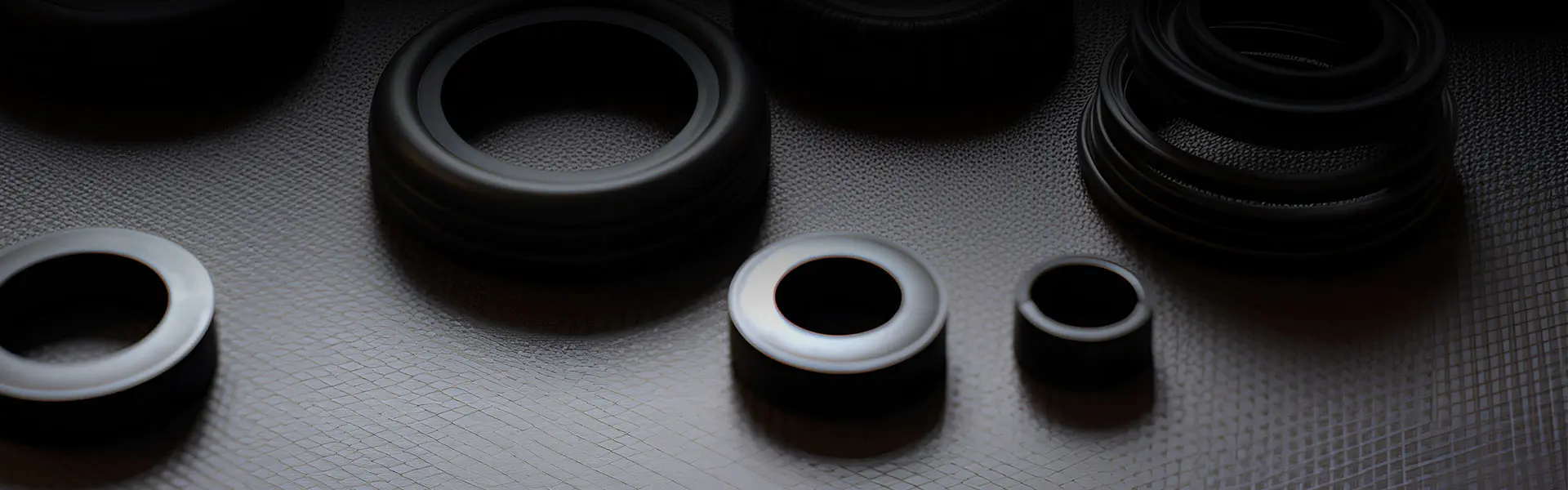

Looking for a seal that keeps working where rubber simply cannot survive? Kaxite Sealing manufactures PTFE O-rings from virgin and filled polytetrafluoroethylene for chemical, pharmaceutical, food, semiconductor and high-temperature service. With 15+ years of sealing manufacturing experience, in-house CNC machining and moulding, full material traceability and export to 60+ countries, we help buyers cut leakage risk and maintenance cost — not just supply a part number.
A PTFE O-ring (also called a PTFE sealing ring) is a circular sealing element made from polytetrafluoroethylene, installed in a machined groove between two mating surfaces to stop the leakage of liquids or gases. Because PTFE is almost universally chemically inert and has an extremely low coefficient of friction, it is the material of choice when elastomer O-rings (NBR, EPDM, FKM) would swell, degrade, harden or contaminate the process media.
These seals are typically specified in three configurations:
If your application is a simple, low-cost static seal in oil or water, a rubber O-ring is usually the better economy. If your media is an aggressive acid, solvent, chlorine, steam or high-purity chemical — PTFE is normally the correct answer.
Choosing the right compound is the single most important buying decision. Pure PTFE offers the best chemical resistance but the lowest mechanical strength; filled grades trade a small amount of chemical resistance for much better creep resistance, thermal conductivity and wear performance. We compound these grades in-house — see PTFE modified material for the full filler portfolio.
| Grade | Filler | Key Advantage | Typical Applications | Food / Pharma Grade |
|---|---|---|---|---|
| Virgin PTFE | None | Best chemical resistance, lowest friction, highest purity | Chemical processing, pharmaceutical, semiconductor, analytical instruments | Yes (FDA / USP VI) |
| Carbon-filled | Carbon | Higher compressive strength, better wear and thermal conductivity | Hydraulic fittings, rotary shafts, valve seats | No |
| Graphite-filled | Graphite | Low friction at high PV, good heat dissipation | Compressors, pumps, dynamic seals | No |
| Glass fiber-filled | Glass fiber | High stiffness, low creep, good dimensional stability | Static seals, structural parts, high-load flanges | No |
| Bronze-filled | Bronze | Highest compressive strength and thermal conductivity | Heavy-duty hydraulics, high-pressure valves | No |
| Property | Unit | Value |
|---|---|---|
| Material | — | Virgin PTFE / Carbon-filled / Graphite-filled / Glass fiber-filled / Bronze-filled |
| Temperature Range | °C | -200 to +260 |
| Pressure Range | MPa | 0–35 |
| Hardness | Shore D | 55–70 |
| Tensile Strength (min.) | MPa | 16 |
| Elongation (min.) | % | 60–80 |
| Compressibility | % | 50–75 |
| Recovery | % | ≥ 70 |
| Permanent Set | % | < 20 |
| Static Coefficient of Friction | — | Approx. 0.04 |
| Color | — | White, black, brown (custom colors on request) |
| Standard | — | AS568, DIN 3771, GB/T 3452.1 |
The table below shows our standard moulded and machined size ranges. Because these rings are frequently machined rather than moulded, we can also produce non-standard and one-off sizes directly from your drawing or sample without tooling cost.
| Section Diameter (mm) | Nominal Inner Diameter (mm) | Section Diameter (mm) | Nominal Inner Diameter (mm) |
|---|---|---|---|
| 1.80 ± 0.10 | 20 ± 0.10 to 300 ± 1.60 | 6.00 ± 0.13 | 80 ± 0.80 to 400 ± 2.00 |
| 2.60 ± 0.10 | 20 ± 0.15 to 300 ± 1.60 | 6.30 ± 0.14 | 80 ± 0.80 to 400 ± 2.00 |
| 3.55 ± 0.10 | 25 ± 0.15 to 300 ± 1.60 | 7.00 ± 0.14 | 100 ± 0.65 to 1000 ± 4.00 |
| 4.00 ± 0.10 | 40 ± 0.20 to 300 ± 1.60 | 8.00 ± 0.16 | 110 ± 1.00 to 2000 ± 4.00 |
| 4.60 ± 0.10 | 40 ± 0.20 to 300 ± 1.60 | 10.00 ± 0.18 | 200 ± 1.50 to 2000 ± 6.00 |
| 5.00 ± 0.10 | 40 ± 0.25 to 400 ± 1.80 | 12.00 ± 0.18 | ≥ 400 ± 1.50 to 6.00 |
| 5.30 ± 0.13 | 60 ± 0.30 to 400 ± 1.80 | 14.00 ± 0.18 | ≥ 400 ± 1.50 to 6.00 |
| 5.50 ± 0.13 | 60 ± 0.30 to 400 ± 1.80 | 16.00 ± 0.18 | ≥ 400 ± 1.50 to 6.00 |
| 5.70 ± 0.13 | 60 ± 0.30 to 400 ± 2.00 | Non-standard sizes available on request | |
This is the most common question we receive from purchasing teams. The answer depends on three variables: the media, the operating temperature, and whether the seal is static or dynamic.
| Property | PTFE | FKM (Viton® type) | EPDM | NBR |
|---|---|---|---|---|
| Chemical resistance | Excellent — near universal | Good | Good (polar media) | Fair (mineral oil only) |
| Temperature range | -200 to +260°C | -20 to +200°C | -50 to +150°C | -30 to +100°C |
| Friction | Very low (0.04) | Medium | Medium | Medium |
| Elasticity / recovery | Low — groove load required | High | High | High |
| Best sealing mode | Static, or spring-energized dynamic | Static & dynamic | Static & dynamic | Static & dynamic |
| Food / pharma suitability | Yes (FDA / USP VI grades) | Some grades | Some grades | Generally no |
PTFE does not behave like rubber. Groove dimensions that work for an NBR O-ring will usually leak with PTFE. Below are the practical rules our technical team applies to every enquiry:
Send us your groove drawing, media, temperature and pressure — we will confirm the correct section diameter, tolerance and grade at no charge.
These seals are widely used in equipment exposed to aggressive chemicals, high temperature or strict hygiene requirements:
For B2B buyers, a sealing failure is far more expensive than the part itself. Our quality control process is built around preventing that risk:
We operate an ISO 9001 quality management system and have supplied sealing components to customers in more than 60 countries, including OEM and MRO distributors across Europe, North America, the Middle East and Southeast Asia.
Kaxite Sealing offers a full custom service to meet your specific sealing requirements:
| Item | Details |
|---|---|
| MOQ | 100 pcs per size (standard); sample orders accepted for evaluation |
| Sampling | Free samples for standard sizes; buyer covers courier cost, refundable against first bulk order |
| Lead time | 7–15 days standard sizes / 15–25 days custom sizes after order confirmation |
| Packaging | Inner PE bag → export carton → plywood pallet; private-label and size-kitted packaging available |
| Shipping | Express (DHL / FedEx / UPS), air freight, sea freight, or buyer's forwarder |
| Incoterms | EXW, FOB Ningbo / Shanghai, CIF, DDP on request |
| Payment | T/T, L/C at sight, Western Union, PayPal for samples |
| Documents | Commercial invoice, packing list, B/L or AWB, certificate of origin, material and inspection reports |
Explore our full sealing products catalogue, learn more about our factory and capabilities, or contact our sales team directly.
A PTFE O-ring is a circular sealing element made from polytetrafluoroethylene, installed in a groove between two mating surfaces to prevent leakage of liquids or gases. It offers excellent chemical resistance, low friction and a wide operating temperature range from -200°C to +260°C.
Kaxite Sealing produces PTFE O-rings with section diameters from 1.80 mm to 16 mm and nominal inner diameters from 20 mm to 2000 mm. Non-standard sizes can be machined to drawings or samples, normally without tooling charges.
Yes. Kaxite Sealing supplies FDA-compliant and USP Class VI virgin PTFE O-rings suitable for food processing, pharmaceutical and medical equipment sealing. Filled grades (carbon, graphite, glass fiber, bronze) are not recommended for these industries.
A solid PTFE O-ring has limited elastic recovery and is best used for static sealing. For dynamic applications, reciprocating rods or low-pressure gas sealing, we recommend a spring-energized PTFE O-ring, which maintains sealing force as the PTFE wears. Send us the motion type, speed and pressure and we will specify the right solution.
PTFE O-rings offer far broader chemical resistance, a wider temperature range (-200°C to +260°C vs. typically -30°C to +200°C for elastomers) and much lower friction. Rubber O-rings offer higher elasticity and better recovery, making them simpler and more economical for standard static and dynamic seals in benign media.
We control raw material batches, keep full batch traceability from resin to finished part, machine and mould in-house, inspect inner diameter, section diameter, concentricity and hardness against AS568 / DIN 3771 / GB/T 3452.1, and carry out AQL-based pre-shipment sampling with an inspection report supplied with the goods.
Yes. We offer laser marking, custom labels, poly-bagging by size and full private-label packaging with your brand and part numbers. MOQ for private-label packaging starts at 500 pcs per size.
Send us your size list, media, temperature and pressure — our engineers will confirm the correct grade, groove design and price within 12 hours on business days.
Send Inquiry NowAddress
No. 432 Zhenhai Middle Road, Luotuo Street, Zhenhai District, Ningbo City, Zhejiang China


