


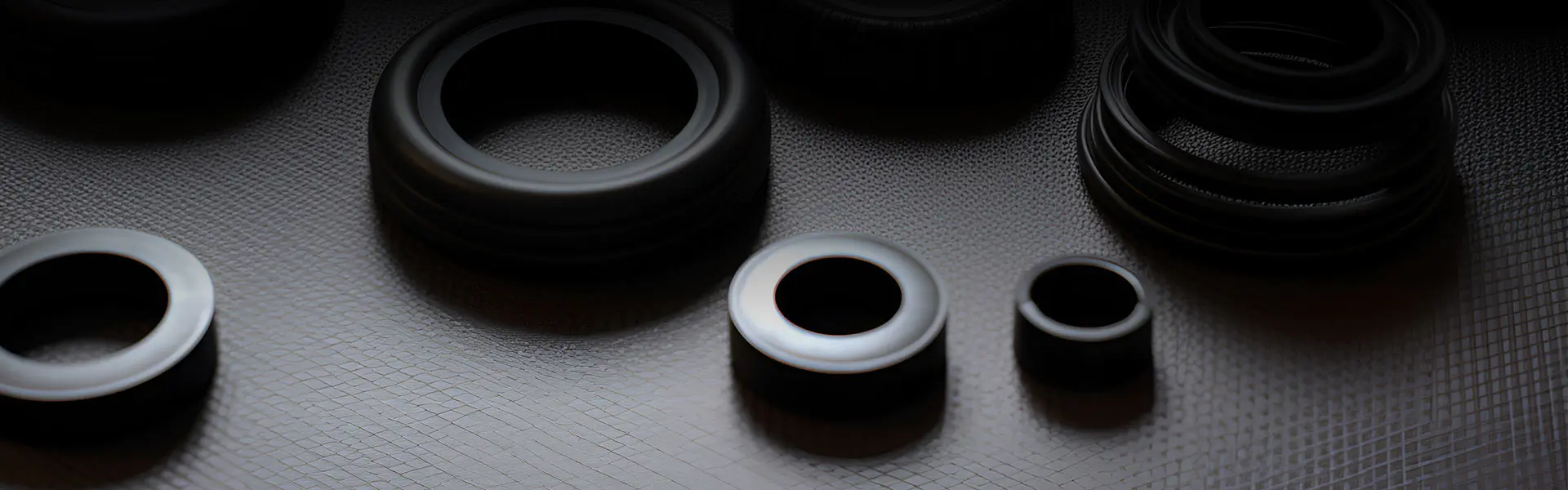
What are Expanded graphite gaskets and how do they work? If you're a procurement specialist sourcing sealing solutions, you know the pressure: you need a gasket that seals perfectly under extreme heat and pressure, doesn't corrode, and lasts for years without costly downtime. Traditional materials often fail, leading to leaks, safety hazards, and production losses. This is where the innovative technology of expanded graphite gaskets comes into play. These are not your average seals; they are engineered from pure graphite that has been exfoliated into a flexible, vermiform structure. Their working principle is brilliant: under compression, this graphite lattice conforms intimately to flange irregularities, creating a superior, resilient seal that withstands thermal cycling and aggressive chemicals. It’s a solution born from deep material science, and for professionals seeking reliability, understanding this technology is key, especially when sourced from specialists like Ningbo Kaxite Sealing Materials Co., Ltd.
The Scorching Problem: Sealing High-Temperature Lines
Imagine a refinery's critical steam line operating at 450°C. A standard non-asbestos gasket starts to degrade, hardening and losing its seal. The result? Dangerous steam leaks, unscheduled shutdowns, and tens of thousands in lost production and emergency maintenance. This high-temperature nightmare is a daily concern for plant managers and procurement teams. The solution lies in the inherent properties of expanded graphite. Unlike organic binders that char, pure expanded graphite is all-carbon. It doesn't melt or burn; its sealing capability actually improves with temperature as it further compacts. This makes it ideal for heat exchangers, exhaust systems, and boiler manways. For such demanding applications, the quality and consistency of the graphite sheet are paramount. This is where a partnership with a certified manufacturer like Ningbo Kaxite Sealing Materials Co., Ltd. proves its value, ensuring the raw material purity and manufacturing control needed for fail-safe performance.

When specifying gaskets for extreme heat, key parameters to evaluate include:
| Parameter | Typical Value for Kaxite Expanded Graphite | Importance |
|---|---|---|
| Maximum Continuous Temperature | Up to 450°C (in air) | Defines application range for oxidizing atmospheres. |
| Thermal Conductivity | High (W/m·K) | Prevents localized overheating at the flange. |
| Compression Set Resistance | Excellent | Ensures the gasket maintains load and seal after thermal cycling. |
| Recommended Sealing Stress | ~70 MPa | Guides proper bolt torque for a reliable initial seal. |
The Corrosive Reality: Sealing Aggressive Chemical Processes
In a chemical processing plant, a pump flange seals a line carrying concentrated sulfuric acid. A gasket with unsuitable fillers or binders can be rapidly attacked, leading to leaks that are not just wasteful but pose severe environmental and safety risks. Corrosion-resistant sealing is non-negotiable. Expanded graphite gaskets excel here due to their chemical inertness. The expanded graphite structure is resistant to a vast array of chemicals, including acids, alkalis, and solvents (except strong oxidizing agents). It won't swell, dissolve, or contaminate the process fluid. This solves a major procurement pain point: reducing the inventory of multiple specialized gaskets by using one versatile, high-performance material. For global buyers, sourcing from a dedicated supplier like Ningbo Kaxite Sealing Materials Co., Ltd. means access to gaskets that meet international standards for chemical resistance, backed by material test reports and traceability.
Critical parameters for chemical service selection:
| Parameter | Consideration for Chemical Service | Procurement Insight |
|---|---|---|
| pH Range Resistance | 0-14 (excluding strong oxidizers) | Versatility reduces inventory complexity. |
| Extraction & Contamination | Negligible | Protects product purity in food/pharma applications. |
| Creep Relaxation | Low | Maintains bolt load and seal integrity over time, preventing leaks. |
| Density Range Available | 1.0 - 1.3 g/cm³ | Higher density offers better sealing for higher pressures. |
Your Questions Answered
How do expanded graphite gaskets work to create a reliable seal?
Their operation is based on conformability and recovery. The expanded graphite consists of layered, interconnected graphite worms. When compressed between flanges, these layers slide and conform to fill every microscopic imperfection on the flange faces, creating a gas-tight initial seal. Crucially, the material has excellent recovery; when the system undergoes thermal cycles causing the flanges to move, the graphite can expand and contract without losing its sealing stress, preventing leak paths from forming. This combination of plastic conformability and elastic memory is what sets them apart from conventional compressed fiber gaskets.
What are the main limitations of expanded graphite gaskets, and how can they be overcome?
The primary limitation is susceptibility to oxidation in high-temperature, high-oxygen environments above 450°C, which can lead to gradual thinning. Another is lower mechanical strength compared to metal gaskets. The solution, offered by quality manufacturers like Ningbo Kaxite Sealing Materials Co., Ltd., is reinforcement. By laminating the expanded graphite with a perforated or solid metal core (tanged metal, foil, or insert), the gasket gains vastly improved tensile strength, handling capability, and resistance to blow-out. For oxidizing atmospheres, specially impregnated grades are available. This turns a potential weakness into a high-strength, application-engineered solution.
Choosing the right sealing partner is as critical as selecting the material. For procurement professionals navigating global supply chains, Ningbo Kaxite Sealing Materials Co., Ltd. stands out as a focused expert in graphite-based sealing technology. With a commitment to rigorous quality control, consistent material sourcing, and providing comprehensive technical data, Kaxite solves the core problem of sealing reliability. They enable buyers to specify with confidence, reduce total cost of ownership by minimizing failures, and streamline the procurement process. Visit https://www.sealing-china.net to explore their product range and technical resources. For specific inquiries, reach out directly to [email protected].
Supporting Research & Literature
Buchanan, R. C., & Park, Y. (1996). Graphite-based gaskets for high-temperature sealing. Journal of Materials Engineering and Performance, 5(3), 347-352.
Huang, X., & Li, S. (2002). Compressive behavior and sealing performance of flexible graphite sheets. Carbon, 40(13), 2425-2432.
Müller, H. K., & Nau, B. S. (1998). Fluid Sealing Technology: Principles and Applications. Marcel Dekker, Inc. (Chapter on Soft Gaskets).
Lee, J., & Kim, H. (2005). Effects of density and flake size on the thermal and mechanical properties of flexible graphite. Journal of Physics and Chemistry of Solids, 66(8), 1407-1411.
Smith, A. B., & Jones, C. D. (2010). Long-term creep relaxation behavior of expanded graphite gaskets under thermal cycling. Sealing Technology, 2010(9), 7-11.
Chen, L., Wang, F., & Zhang, Q. (2012). Chemical resistance of exfoliated graphite-based sealing materials in aggressive media. Industrial & Engineering Chemistry Research, 51(35), 11415-11420.
International Association of Engineering Insurers. (2017). Loss Prevention Guideline: Flange Sealing with Gaskets. (IMIA WGP 92).
EuroNorm EN 1514 (Series). (2006). Flanges and their joints - Gaskets for PN-designated flanges.
ASTM F104-16. (2016). Standard Classification System for Nonmetallic Gasket Materials. ASTM International.
García, M. P., & Fernández, J. A. (2019). Advanced sealing solutions for renewable energy applications: A focus on graphite materials. Renewable Energy Focus, 29, 1-9.


