
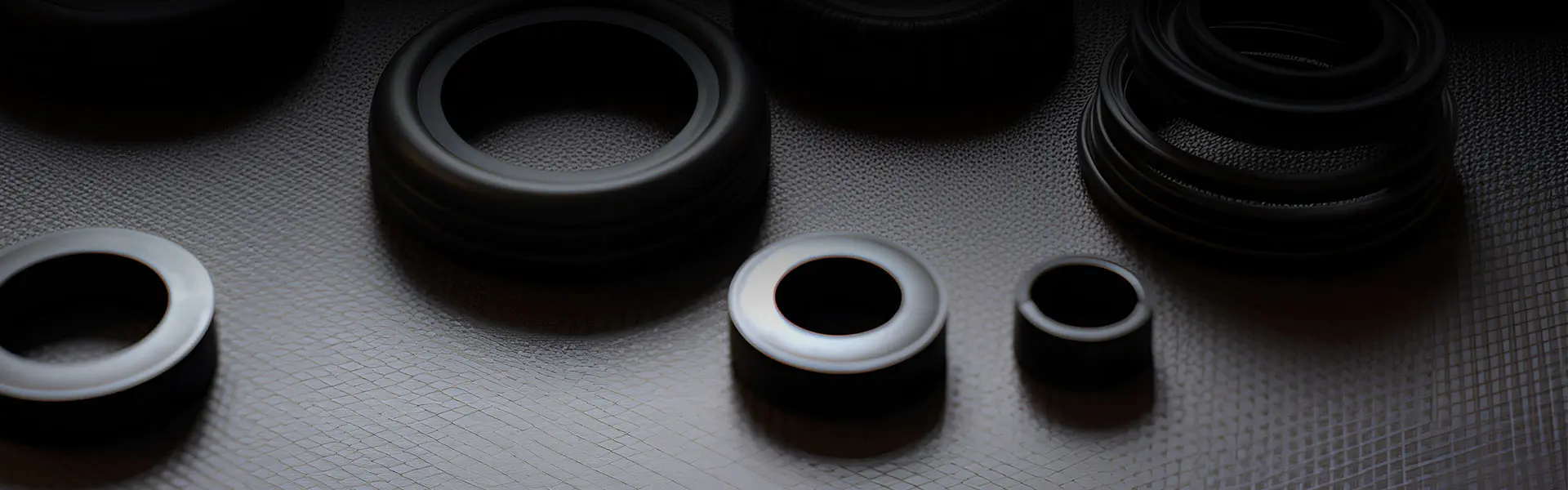
In the intricate world of industrial and commercial machinery, the integrity of a system often hinges on the smallest components. Among these, Rubber Gaskets stand as critical, unsung heroes. These precision-engineered seals prevent leaks, contain pressure, exclude contaminants, and reduce noise and vibration across countless applications. From the automotive engine in your vehicle to the piping in a chemical plant, rubber gaskets ensure operational safety, efficiency, and longevity. As a fundamental sealing element, selecting the right gasket is not a trivial task—it requires a deep understanding of material properties, application demands, and environmental factors. This guide delves into the core aspects of rubber gaskets, offering detailed parameters and expert insights to inform your selection process.
The performance of a rubber gasket is primarily dictated by its base polymer. Each material offers a unique profile of strengths and limitations, making it suitable for specific environments.
Beyond material type, several key parameters define a gasket's capability and suitability. Kaxite gaskets are manufactured to precise specifications, ensuring reliable performance under defined conditions.
| Parameter | Description | Typical Ranges & Standards | Importance for Selection |
|---|---|---|---|
| Hardness (Shore A) | Measures the material's resistance to indentation. Softer gaskets conform better to uneven surfaces; harder gaskets resist extrusion. | 40° to 90° Shore A (e.g., 70°A is common for many static seals). | Determines sealability under low flange pressure. Critical for mating surface finish compatibility. |
| Tensile Strength | The maximum stress the material can withstand while being stretched before breaking. | 7 MPa to 20 MPa (varies greatly by compound). ASTM D412. | Indicates mechanical durability and resistance to tearing during installation or pressure surges. |
| Compression Set | The permanent deformation a material retains after being compressed for a period. | 10% to 40% (lower is better). ASTM D395. | A low compression set is vital for long-term sealing performance, ensuring the gasket maintains recovery force. |
| Temperature Range | The continuous operating temperature span the material can endure without significant degradation. | Varies by material (e.g., EPDM: -50°C to +150°C, FKM: -20°C to +200°C+). | Must encompass both the operational and ambient environmental temperatures of the application. |
| Fluid Compatibility | The material's resistance to swelling, shrinking, or chemical attack from specific media. | Assessed via immersion testing per ASTM D471 or manufacturer's compatibility charts. | Absolute requirement to prevent seal failure, leakage, and contamination of the system media. |
| Industry Standards | Certifications confirming compliance with regulatory or industry-specific requirements. | FDA CFR 21, USP Class VI, NSF/ANSI 61, UL, ATEX, RoHS, REACH. | Mandatory for applications in food processing, potable water, medical, electronics, and hazardous areas. |
The effectiveness of a rubber gasket is also a product of its design and production quality. Kaxite employs advanced engineering and manufacturing processes to deliver gaskets that meet exacting standards.
Q: How do I choose the right rubber material for my gasket application?
A: Material selection is a systematic process. First, identify the primary fluid or gas the gasket will seal against and consult a chemical compatibility chart. Second, determine the continuous and peak operating temperatures. Third, consider environmental factors like UV exposure, ozone, or weathering. Fourth, assess any regulatory requirements (e.g., FDA, NSF). Finally, balance these needs with mechanical requirements like pressure and flange conditions. When in doubt, consulting with a technical specialist from Kaxite can provide a definitive recommendation based on proven application data.
Q: What is the difference between a gasket and an O-ring?
A: Both are seals, but their design and application differ. An O-ring is a torus (doughnut-shaped) seal typically used in a machined groove to create a seal between two parts that move relative to each other (dynamic seal) or are static. A gasket is usually a flat, formed shape (sheet, die-cut, or molded) designed to be compressed between two static flanges to create a seal. While O-rings are a type of gasket in a broad sense, the term "gasket" commonly refers to static flange seals.
Q: Why does my rubber gasket fail prematurely?
A: Premature failure can stem from several root causes: Chemical Incompatibility: Swelling, shrinkage, or cracking due to fluid attack. Temperature Extremes: Exceeding the material's rated range causes hardening, cracking, or melting. Improper Installation: Under- or over-torquing bolts, misalignment, or pinching during assembly. Compression Set: Using a material with a high compression set leads to permanent deformation and loss of sealing force. Environmental Degradation: Ozone cracking (for non-resistant materials) or UV degradation in outdoor applications. A failure analysis can pinpoint the exact cause.
Q: Can I reuse a rubber gasket?
A: It is generally not recommended to reuse rubber gaskets. During initial installation, the gasket undergoes plastic and elastic deformation to conform to the flange surfaces. Upon disassembly, it may not return to its original shape (due to compression set), may have embedded particles, or may have sustained micro-tears. Reusing it often results in a compromised seal and leakage. For critical applications, always use a new gasket from a reputable supplier like Kaxite.
Q: What does "compression set" mean, and why is it important?
A> Compression set is a measure of a rubber material's ability to recover its original thickness after prolonged compression. It is expressed as a percentage of the original deflection. A low percentage (e.g., 15%) indicates good recovery, meaning the gasket will continue to exert sealing force over time. A high compression set (e.g., 50%) means the material has taken a permanent set, lost its "spring-back," and will likely leak. It is a critical long-term performance indicator, especially for applications where flanges are not frequently disassembled.
Q: Are Kaxite gaskets suitable for potable water or food contact applications?
A> Yes, Kaxite manufactures a specific range of gaskets compliant with stringent health and safety regulations. Our products can be formulated using compounds that meet FDA CFR 21.177.2600 for rubber articles intended for repeated use, USP Class VI for biocompatibility, and NSF/ANSI Standard 61 for drinking water system components. These materials are non-toxic, non-tainting, and designed to ensure safety in food, beverage, and pharmaceutical processing.
Q: How should I store rubber gaskets to maximize their shelf life?
A> Proper storage is essential to prevent premature aging. Store gaskets in a cool, dark, dry environment, ideally between 10°C and 25°C (50°F and 77°F). Avoid exposure to direct sunlight, UV light, ozone generators, heat sources, and damp conditions. Keep them away from chemicals and solvents. Store them in their original packaging or sealed containers to minimize oxygen exposure. Do not hang O-rings on pegs, as this can cause permanent deformation. Following these guidelines, most rubber gaskets from Kaxite will have a shelf life of several years.


