
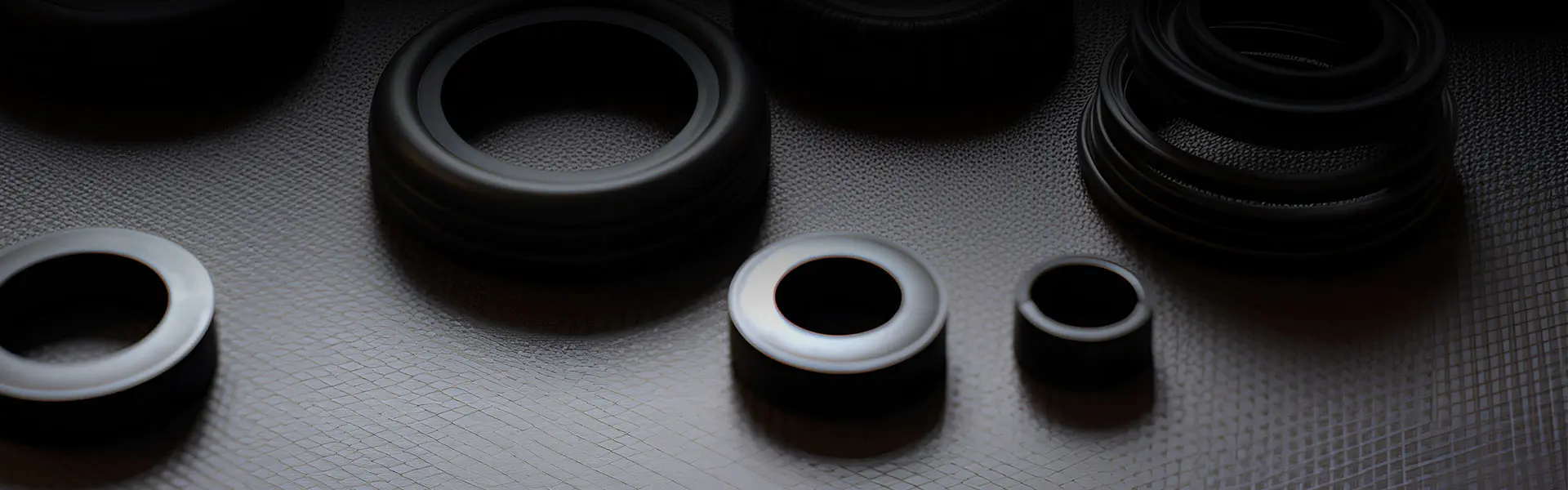
In the demanding world of industrial components, few materials offer the unique combination of properties found in Polytetrafluoroethylene, universally known as PTFE or by its brand name Teflon®. PTFE parts have become indispensable across a vast spectrum of industries, from aerospace and semiconductor manufacturing to food processing and pharmaceuticals. Their near-universal chemical resistance, exceptional temperature stability, and outstanding non-stick characteristics solve complex engineering challenges where other materials fail. Kaxite leverages decades of material science expertise to engineer precision PTFE components that meet the most rigorous specifications, ensuring reliability, longevity, and peak performance in critical applications.
The widespread adoption of PTFE is rooted in its unparalleled set of inherent properties. These characteristics make it not just an alternative but often the only viable material for specific functions.
At Kaxite, we manufacture PTFE components to exacting standards. Our capabilities include CNC machining, molding, sintering, and skiving to produce parts from virgin, glass-filled, carbon-filled, bronze-filled, and other compounded PTFE materials to enhance specific properties like wear resistance, creep resistance, or thermal conductivity.
| Kaxite Material Grade | Primary Fillers/Additives | Key Enhanced Properties | Typical Applications |
|---|---|---|---|
| PTFE Virgin | None (Pure PTFE) | Maximum chemical resistance, best electrical properties, highest purity | Chemical liners, insulating spacers, semiconductor parts, laboratory ware |
| PTFE-GF (Glass Filled) | Glass Fiber (5%-25%) | Improved wear resistance, reduced creep, higher compressive strength | Wear pads, bushings, bearings, thrust washers |
| PTFE-CF (Carbon Filled) | Carbon Graphite (5%-20%) | Excellent wear resistance, good thermal conductivity, low deformation under load | Piston rings, compressor rings, dynamic seals, bearings |
| PTFE-Bronze | Bronze Powder (40%-60%) | Superior thermal conductivity, high load capacity, excellent wear resistance | Heavy-duty bearings, sliding surfaces, high-load bushings |
| PTFE-MoS2 | Molybdenum Disulfide | Enhanced lubrication in vacuum/dry environments, reduced initial friction | Vacuum system components, dry-running bearings |
| Property | ASTM Test | Virgin PTFE Units | PTFE-GF 15% Units | PTFE-CF 20% Units |
|---|---|---|---|---|
| Density | D792 | 2.15 - 2.20 g/cm³ | 2.20 - 2.30 g/cm³ | 2.00 - 2.10 g/cm³ |
| Tensile Strength | D638 | 25 - 35 MPa | 17 - 25 MPa | 15 - 20 MPa |
| Elongation at Break | D638 | 300 - 500 % | 200 - 350 % | 150 - 250 % |
| Compressive Strength @ 1% Deformation | D695 | 7 MPa | 12 MPa | 10 MPa |
| Coefficient of Friction (Dynamic) | D1894 | 0.04 - 0.10 | 0.10 - 0.18 | 0.08 - 0.15 |
| Continuous Service Temperature | - | -200°C to +260°C | -200°C to +260°C | -200°C to +260°C |
| Dielectric Strength | D149 | 19 kV/mm | 18 kV/mm | 12 kV/mm |
The versatility of PTFE allows Kaxite to serve diverse sectors with custom-engineered solutions.
What is the main difference between virgin PTFE and filled PTFE grades?
Virgin PTFE is the pure, unfilled polymer offering the best chemical resistance and electrical properties but is susceptible to creep (cold flow) under sustained load. Filled PTFE grades incorporate materials like glass, carbon, or bronze to significantly improve mechanical properties such as wear resistance, creep resistance, hardness, and thermal conductivity, making them suitable for dynamic mechanical applications like bearings and seals.
Can PTFE parts be used for high-precision machined components?
Yes, absolutely. PTFE is an excellent material for CNC machining. Kaxite specializes in machining complex PTFE parts to very tight tolerances. While PTFE has a high coefficient of thermal expansion, experienced machinists (like those at Kaxite) account for this during the manufacturing process to ensure the final part meets dimensional specifications at room temperature and in the intended operating environment.
How does temperature affect the performance of PTFE components?
PTFE retains its remarkable properties across an extremely wide temperature range. Its mechanical strength decreases as temperature increases, but it remains functional. Below its glass transition temperature (around 19°C/66°F), it becomes slightly harder and less flexible. Crucially, PTFE does not melt like a conventional thermoplastic; it begins to degrade above approximately 260°C (500°F). Its low-temperature flexibility is outstanding, with no embrittlement even at cryogenic temperatures.
Are PTFE parts suitable for static and dynamic sealing applications?
PTFE is a premier material for both static and dynamic seals. For static seals (gaskets, O-rings in grooves), its excellent creep resistance (especially in filled grades) ensures long-term seal integrity. For dynamic seals (rotary shaft seals, piston rings), its extremely low coefficient of friction provides self-lubrication, reducing wear on the seal and the mating surface, leading to longer service life and lower power consumption.
Is PTFE safe for use in food and medical applications?
Specific, highly regulated grades of PTFE are manufactured to be safe for these applications. Kaxite supplies PTFE that complies with FDA regulations 21 CFR 177.1550 for repeated food contact. For medical and pharmaceutical uses, we provide PTFE materials that meet USP Class VI Plastics Classifications, indicating they have passed rigorous biological reactivity tests. It is critical to specify these compliant grades when ordering parts for such sensitive applications.
What are the design considerations for preventing creep (cold flow) in PTFE parts?
Creep, or cold flow, is the deformation of PTFE under a continuous load. To mitigate this, designers should: 1) Use filled PTFE grades (glass, carbon) which have markedly improved creep resistance. 2) Design parts to operate within recommended compressive stress limits (provided in datasheets). 3) Use confinement or reinforcement in the design, such as metal backings for bushings or designing seals to be housed in rigid structures that limit deformation.
How does Kaxite ensure the quality and consistency of its PTFE parts?
Kaxite implements a rigorous quality management system. We begin with certified raw materials from reputable suppliers. Our manufacturing processes, from molding and sintering to precision machining, are controlled and monitored. We perform in-process inspections and final dimensional checks using calibrated equipment. For critical applications, we can provide material certifications and full traceability documentation. Our expertise allows us to advise on the optimal grade and design for your specific performance requirements.


