


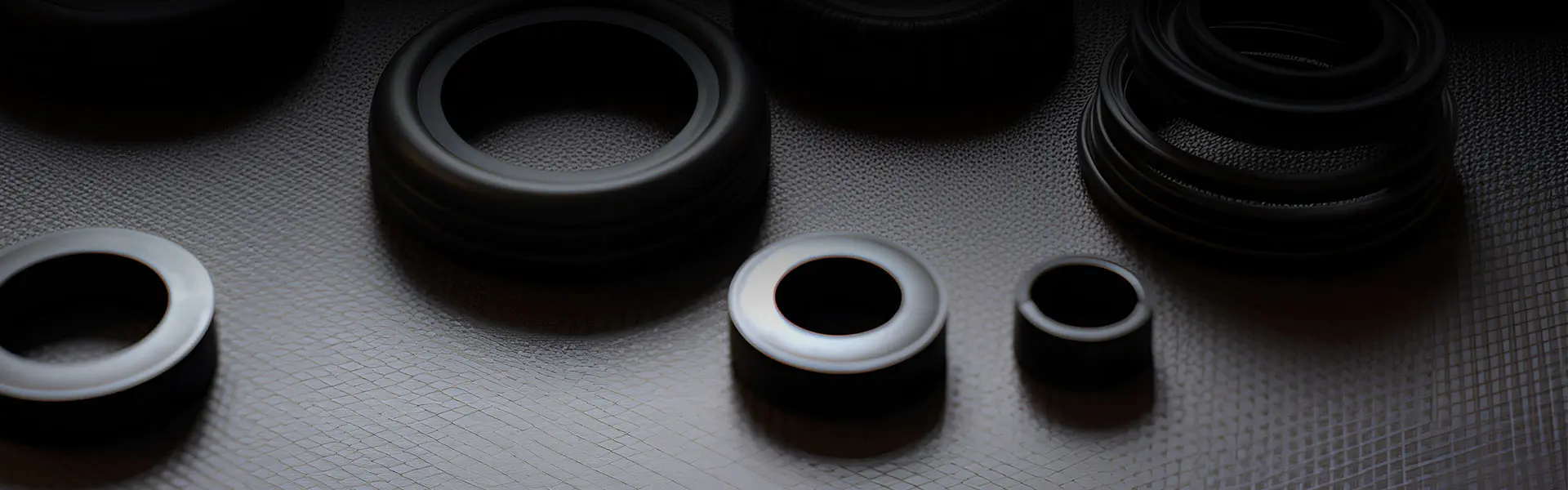
Expanded Graphite Gaskets: The Definitive Guide to High-Performance Sealing
For over two decades, our team at Kaxite has been at the forefront of sealing technology, witnessing the evolution of materials and applications. Among the most significant advancements are Expanded Graphite Gaskets. These are not mere components; they are engineered solutions for extreme conditions. Crafted from pure exfoliated graphite without binders, Kaxite Expanded Graphite Gaskets offer unparalleled reliability in sealing flanges across a vast spectrum of industries, from aggressive chemical processing to ultra-high-temperature power generation.
The intrinsic properties of expanded graphite—its flexibility, thermal resilience, and chemical inertness—make it a superior alternative to traditional compressed non-asbestos (CNAF), PTFE, or metal gaskets in countless scenarios. This guide delves deep into the technical specifications, benefits, and application guidelines that define premium Expanded Graphite Gaskets, providing the detailed insight engineers and procurement specialists need to specify with confidence.
Core Advantages of Kaxite Expanded Graphite Gaskets
Choosing the right gasket material is critical for system integrity, safety, and total cost of ownership. Kaxite Expanded Graphite Gaskets deliver a compelling set of advantages:
- Exceptional Thermal Stability: Capable of continuous operation from cryogenic temperatures up to 3000°F (1650°C) in inert or reducing atmospheres, and up to 900°F (485°C) in oxidizing environments when properly retained.
- Superior Chemical Resistance: Highly inert to a wide range of media including acids, alkalis, solvents (except strong oxidizing acids), and molten metals.
- Outstanding Sealing Performance: The soft, conformable nature of graphite creates an excellent seal at low flange pressures, compensating for minor flange imperfections.
- Creep Relaxation Resistance: Exhibits minimal relaxation under load and temperature cycling, maintaining bolt load and sealing force over long periods.
- Flexibility & Conformability: Easily handles uneven flanges, warpage, and thermal distortion, reducing the need for perfect surface finishes.
- Non-Contaminating: Pure graphite is clean, leaving no residue and is suitable for food, pharmaceutical, and ultra-pure process applications.
Detailed Product Parameters & Specifications
Kaxite Expanded Graphite Gaskets are manufactured to exacting standards. The following tables outline our standard material properties and available configurations.
Material Property Data Sheet
| Property | Test Method | Typical Value (Kaxite EG-100) | Units |
|---|---|---|---|
| Density (Nominal) | ASTM F 1315 | 1.0 - 1.1 | g/cm³ |
| Compressibility | ASTM F 36 | 40 - 50% | % @ 10,000 psi |
| Recovery | ASTM F 36 | 15 - 25% | % |
| Tensile Strength | ASTM F 152 | 5.5 Min | MPa |
| Stress Relaxation | ASTM F 38 | < 15% | % @ 24h, 500°F |
| Thermal Conductivity | ASTM D 5470 | 5 - 10 (in-plane) | W/m·K |
| Maximum Temperature (Oxidizing) | - | 900 | °F |
| Maximum Temperature (Inert/Reducing) | - | 3000 | °F |
| pH Range | - | 0 - 14* | - |
* Excluding strong oxidizing agents like fuming nitric acid, concentrated sulfuric acid above 98%, and molten chlorates.
Standard Gasket Configurations
| Product Type | Description | Standard Thickness | Standard Formats | Typical Applications |
|---|---|---|---|---|
| EG Sheet & Die-Cut Gaskets | Plain expanded graphite sheets, cut to specific shapes. | 0.5mm, 0.8mm, 1.5mm, 3.0mm | Sheets (1m x 1m), custom die-cuts, spiral wound filler. | Heat exchangers, pipe flanges, manways, boiler doors. |
| Graphite Foil Laminated Gaskets | Graphite foil laminated to stainless steel or other metal cores for handling. | 1.5mm, 3.0mm (total) | Full-face, inner/outer ring, custom profiles. | Pump covers, valve bonnets, aggressive chemical service. |
| Corrugated Graphite Gaskets | Graphite foil with a corrugated metal core for enhanced blow-out resistance. | 3.0mm, 4.5mm | Ring-type, jacketed designs. | High-pressure steam, cyclic service, large diameters. |
| Kammprofile / Grooved Metal Gaskets | Metal core with serrated grooves filled with expanded graphite. | As per customer spec | Ring-type, various profiles (V, W). | Critical high-pressure/temperature flanges in oil & gas, refining. |
Frequently Asked Questions (FAQ)
What are the primary limitations of Expanded Graphite Gaskets?
The main limitations involve exposure to strong oxidizing environments at high temperatures and media containing strong oxidizing agents. Prolonged exposure to oxygen at temperatures above 900°F (485°C) can lead to gradual oxidation. For such applications, proper flange design with compression stops or the use of jacketed/graphite-foil-laminated gaskets with protective layers is essential to limit oxygen access. They are also relatively soft, so handling requires care to avoid tearing, and they require adequate flange bolting to prevent blow-out under high internal pressure.
How do I determine the correct thickness for my application?
Thickness selection depends on flange type, surface condition, pressure, and temperature. For standard ANSI B16.5 flanges with serrated or spiral-wound finishes, 1.5mm (1/16") is common. For flanges with significant unevenness or warpage, a thicker gasket (3.0mm or 1/8") may be needed to ensure proper conformance. High-pressure applications often use thinner gaskets (0.5mm or 0.8mm) in combination with a rigid, serrated metal core (Kammprofile) to control compression. Consulting Kaxite engineering with your specific flange details is recommended for critical service.
Can Kaxite Expanded Graphite Gaskets be used with all flange facing types?
They are highly versatile but perform best with specific finishes. Ideal finishes include serrated concentric/phonographic (125-250 µin AA), spiral wound groove, and male-female tongue-and-groove. They can also seal on smooth machined surfaces. They are generally not recommended for use on flat-face flanges without a retaining ring under high pressure due to potential blow-out. The soft graphite conforms well to the grooves, creating multiple sealing barriers.
What is the recommended bolt torque or stress for installing these gaskets?
Expanded graphite requires sufficient compressive stress to flow into flange imperfections but is sensitive to over-compression which can cause crushing. A general target seating stress ranges from 7,000 to 15,000 psi (48 to 103 MPa). It is crucial to follow a cross-pattern torque sequence, bringing the flange up to the final target torque in multiple incremental steps (e.g., 30%, 60%, 100%). Always refer to the specific Kaxite product data sheet and consider using controlled bolt-loading methods for large or critical flanges.
How do Expanded Graphite Gaskets from Kaxite compare to PTFE (Teflon) gaskets?
While both are chemically resistant, key differences exist. Kaxite graphite handles much higher temperatures (up to 3000°F vs. 500°F for PTFE) and exhibits far lower creep relaxation. PTFE can cold flow under load, leading to leak paths, whereas graphite maintains seal integrity. Graphite also has superior thermal conductivity. PTFE may be preferable for certain ultra-pure or specific chemical applications where its non-stick properties are needed, but for most high-temperature and general chemical services, expanded graphite offers longer-lasting, more reliable performance.
Are there special storage or handling requirements?
Yes. Kaxite Expanded Graphite Gaskets should be stored in their original packaging in a clean, dry, and temperature-controlled environment away from direct sunlight and oxidizing chemicals. Handle with clean gloves to prevent contamination from oils on the skin. Avoid bending or folding the material, especially thin sheets and pure foil gaskets, as this can create weak points. For laminated or reinforced gaskets, protect the sealing faces from scratches or dents during transport and installation.
Can you supply gaskets with special features like adhesive backing, punch-outs, or custom shapes?
Absolutely. Kaxite specializes in engineered sealing solutions. We routinely produce gaskets with pressure-sensitive adhesive (PSA) backing for easy installation on heat shields or covers. We can create multi-layer composites, incorporate monitoring holes, provide kiss-cut sheets for easy removal, and manufacture virtually any 2D custom shape via precision die-cutting, water-jet cutting, or CNC machining from sheet stock. Send your detailed drawing or sketch for a prompt quote.


