
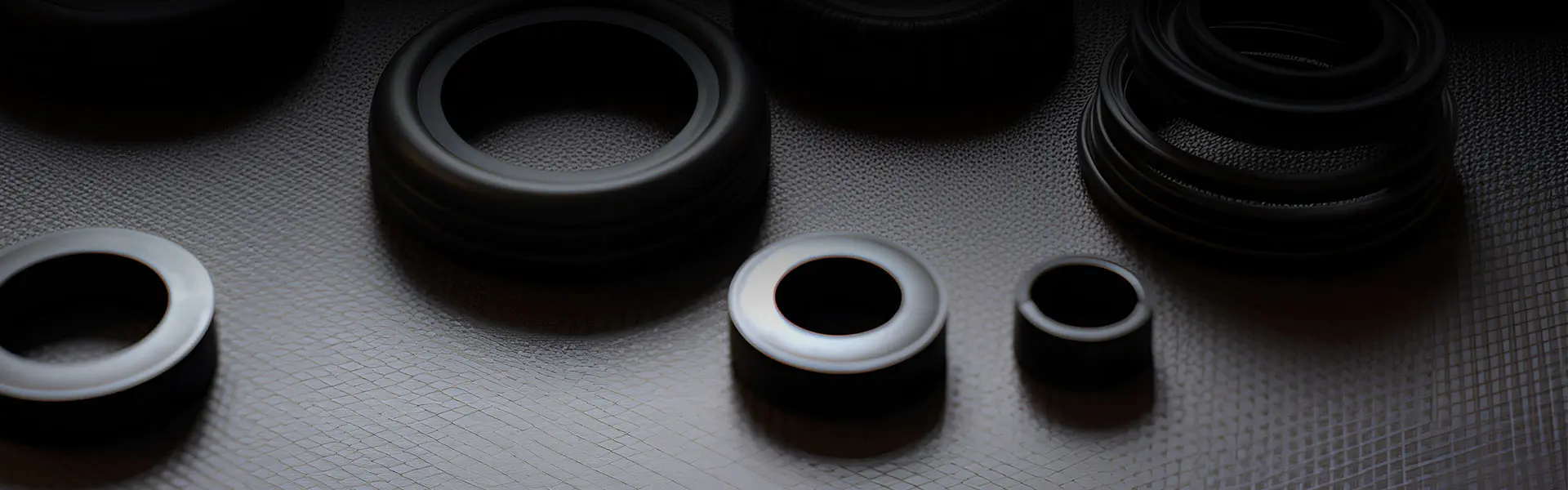
Copper gaskets are essential sealing components used across numerous high-performance industries. Crafted from high-purity copper alloys, these gaskets create a robust, reliable, and often malleable seal between two mating surfaces. Their primary function is to prevent leaks of fluids or gases under extreme conditions of temperature and pressure. Unlike softer materials, copper gaskets can withstand significant stress while maintaining their sealing integrity, making them indispensable in applications where failure is not an option. At Kaxite, we engineer our copper gaskets to meet the most demanding specifications, ensuring longevity and performance in critical systems.
The versatility and durability of copper gaskets make them suitable for a wide array of demanding environments. Their unique properties are leveraged in sectors where safety and reliability are paramount.
Kaxite gaskets are manufactured from premium copper alloys, selected for specific application needs. Our standard material is C11000 Electrolytic Tough Pitch (ETP) Copper, but we offer a range of alloys including C10100 (Oxygen-Free Copper), C12200 (Phosphorus-Deoxidized Copper), and various copper-nickel alloys.
| Property | Typical Value (C11000 ETP Copper) | Benefit for Sealing |
|---|---|---|
| Thermal Conductivity | 391 W/m·K | Excellent heat dissipation, prevents localized overheating. |
| Melting Point | 1085°C (1985°F) | Maintains integrity in extremely high-temperature environments. |
| Yield Strength (Annealed) | 33 MPa (4.8 ksi) | Good malleability for conforming to flange imperfections. |
| Tensile Strength | 220 MPa (32 ksi) | High strength to withstand internal pressure and bolt load. |
| Corrosion Resistance | Excellent (Atmosphere, Water) | Long-lasting performance with minimal degradation. |
| Pressure Rating | Application Dependent (Up to 10,000+ PSI) | Suitable for ultra-high-pressure systems. |
Kaxite provides both standard and fully customized copper gaskets. Our manufacturing process ensures precise tolerances for a perfect fit and optimal seal. Below are our standard manufacturing specifications.
Q: When should I choose a copper gasket over other materials like rubber or graphite?
A: Copper gaskets are the superior choice in high-temperature, high-pressure, or high-load applications. If your operating temperature exceeds 400°C (750°F) where elastomers fail, or if you require a metal-to-metal seal for extreme pressure containment (common in oil & gas), copper is ideal. It is also non-porous and offers excellent corrosion resistance in many media, unlike graphite which can oxidize. For environments involving combustion, cryogenics, or high thermal cycling, Kaxite copper gaskets provide unmatched reliability.
Q: How do I ensure a proper seal with a copper gasket during installation?
A: Proper installation is critical. First, ensure both flange surfaces are clean, smooth, and free of scratches or old gasket material. The gasket should be centered perfectly. Use a calibrated torque wrench to tighten bolts in a star-pattern sequence to the manufacturer's specified torque value. This ensures even compression across the entire gasket face. Copper is malleable; it will deform to fill micro-imperfections, creating a tight seal. Avoid over-torquing, which can crush the gasket and reduce its effectiveness or damage the flanges.
Q: Are copper gaskets reusable?
A: Generally, copper gaskets are not recommended for reuse, especially in critical sealing applications. During initial installation and operation, the copper work-hardens and deforms to match the specific flange surfaces. Removing and reinstalling a used gasket may not achieve the same seal integrity, as the hardened material will not conform as readily a second time, and minor imperfections or compression set may lead to leaks. Kaxite recommends using a new gasket for each assembly to guarantee optimal performance and safety.
Q: Can Kaxite produce custom-shaped copper gaskets for non-standard applications?
A: Absolutely. Customization is a core strength at Kaxite. We can manufacture copper gaskets in virtually any shape—oval, square, rectangular, or complex geometries—based on your provided drawings or CAD files. We work with non-standard thicknesses, custom hole patterns, and specific alloy requirements. Our engineering team can also advise on the best design and material for your specific pressure, temperature, and chemical exposure conditions.
Q: How does the "crush" characteristic of copper gaskets benefit sealing?
A: The malleability or "crush" of copper is a key sealing advantage. When compressed between flanges, the copper flows plastically into the microscopic grooves and irregularities of the flange faces. This flow creates a custom, line-to-line contact seal that is often more effective than a harder, less malleable metal. This characteristic allows Kaxite copper gaskets to compensate for minor surface flaws and ensure a leak-free joint even under varying thermal cycles that cause flanges to expand and contract.
Q: What maintenance or inspection is required for joints sealed with copper gaskets?
A: While copper gaskets are highly durable, periodic inspection is good practice in critical systems. During scheduled maintenance shutdowns, inspect the flange joint for any signs of external corrosion or leakage. When disassembling, examine the used gasket for uneven compression, extrusion, or signs of chemical attack. Always replace the gasket with a new Kaxite component. Regularly checking and re-torquing bolts after the initial heat cycles, if recommended for the specific application, can help maintain the optimal sealing load.


